Exhibit E / A Canadian connection
Canada’s response.
A history to carry forward.
Explore Canada’s humanitarian response to the Armenian Genocide through the people, relief efforts and survivor histories presented in Exhibit E.
From aid and refuge to remembrance, follow a history that connects Armenian lives with Canada—and consider what preserving those connections means today.
Explore Canada’s Response ↗
EXHIBIT G · ARMENIAN LIFE BEFORE 1915
Armenian Life Before 1915
The Interactive Atlas
Discover the Armenian cities, villages and communities that flourished before the Armenian Genocide. Explore their schools, churches, businesses, cultural institutions and the everyday lives of the people who built them.
From Constantinople and the Armenian Highlands to Cilicia and the Mediterranean ports, the Interactive Atlas brings Armenian history to life through an expanding collection of places, historical records and stories of enterprise, culture and community.
Explore the Atlas ↗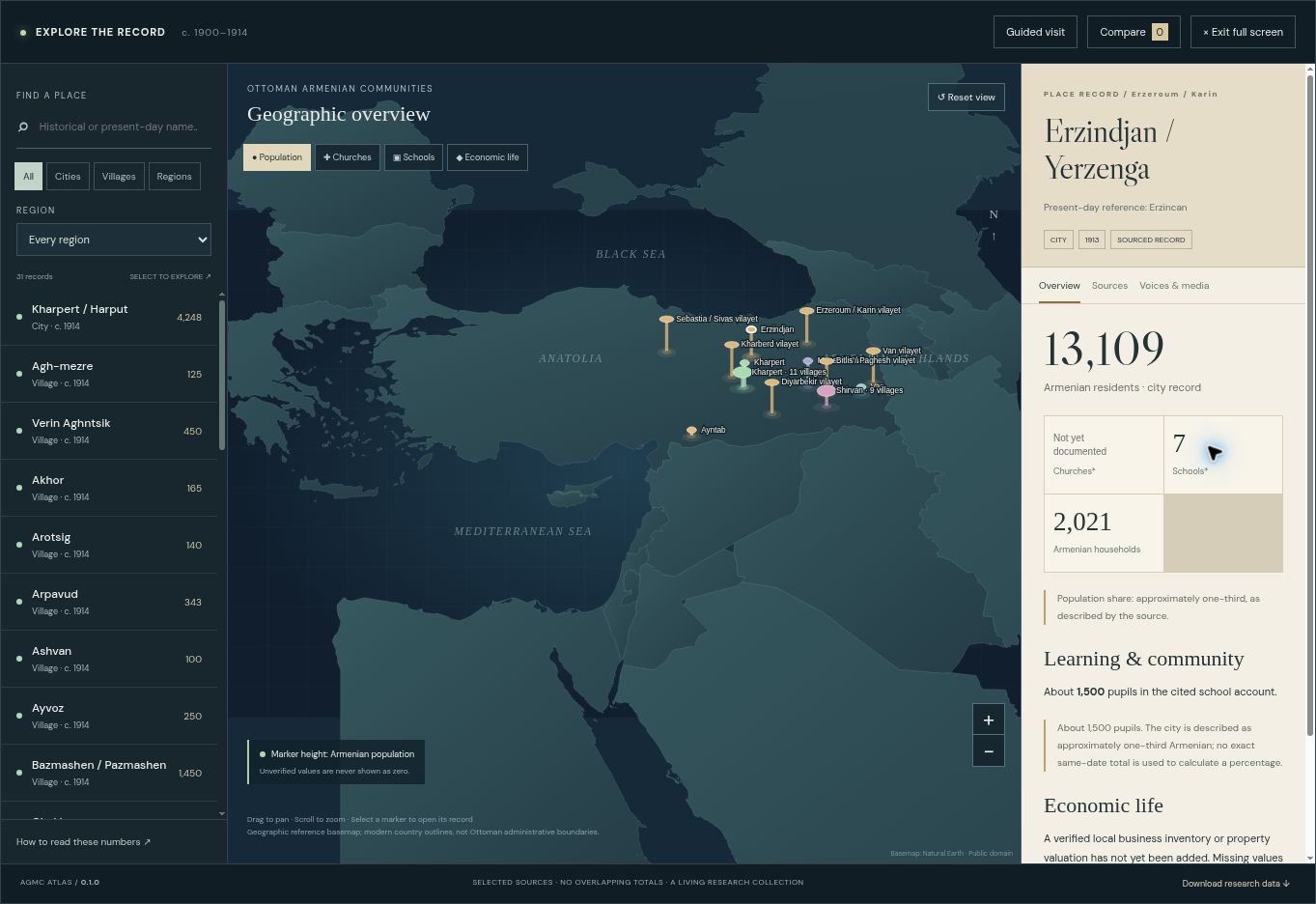
Raphael Lemkin at the UN on Coining the Word “Genocide”
On February 13 1949, CBS aired Raphael Lemkin at the United Nations discussing how he coined the word genocide, citing the Armenian Genocide and the Tehlirian trial. The interview followed the UN’s adoption of the Genocide Convention on December 9 1948, prior to its later entry into force in 1951.
Research / The lives behind the record
Follow the evidence.
Recover the history.
Behind a building, a business or a family document lies a history worth understanding. Explore Armenian lives, cultural inheritance and economic loss through studies you can read, question and return to.
Sources to follow. Methods to examine. Studies that grow with the evidence.


Architecture: Guillaume Berggren, 1870, Library of Congress, public domain. Family portrait: Calouste Gulbenkian and family, Fundação Calouste Gulbenkian collection, via Wikimedia Commons (CC0). Monochrome display and layout crops. Contextual images; the portrait is not evidence of property confiscated during the Genocide.