
Study 03 · Genocide & collective destruction
What Is Genocide?
The Anatomy of a Destroyed Future
An investigation into the Armenian Genocide, the historical language of holocaust, and the destruction of a people’s capacity to continue across generations.
Back to Research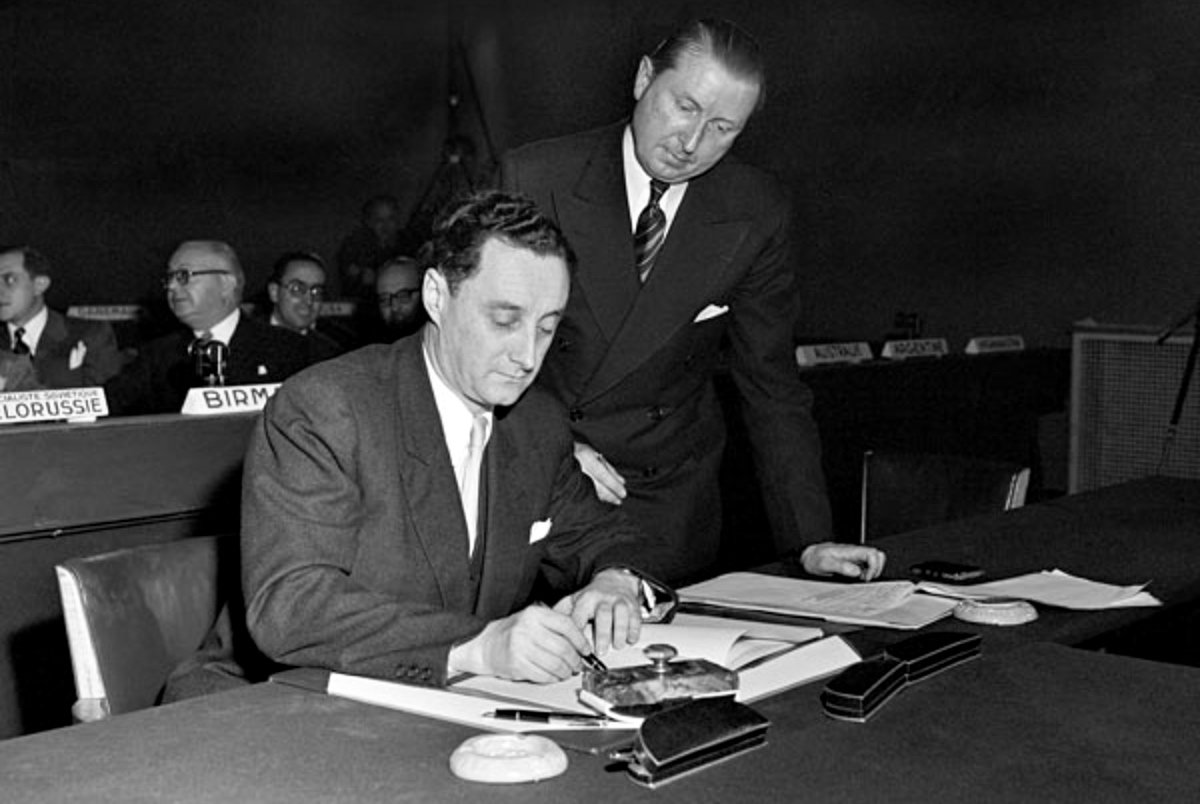 1948 United Nations Genocide Convention
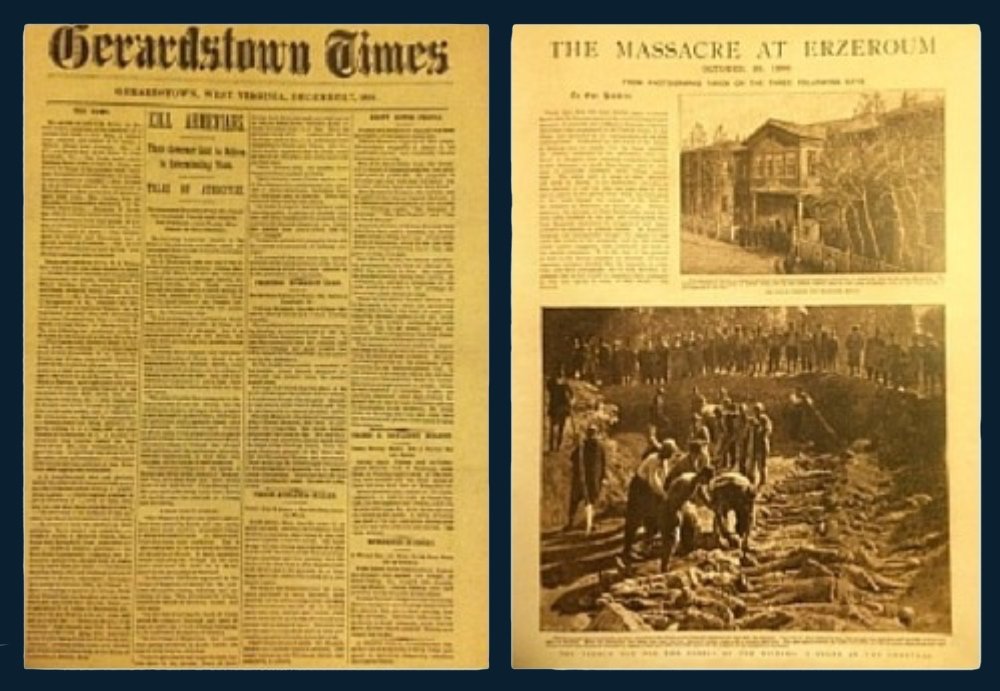 Historical newspaper coverage of Armenian persecution
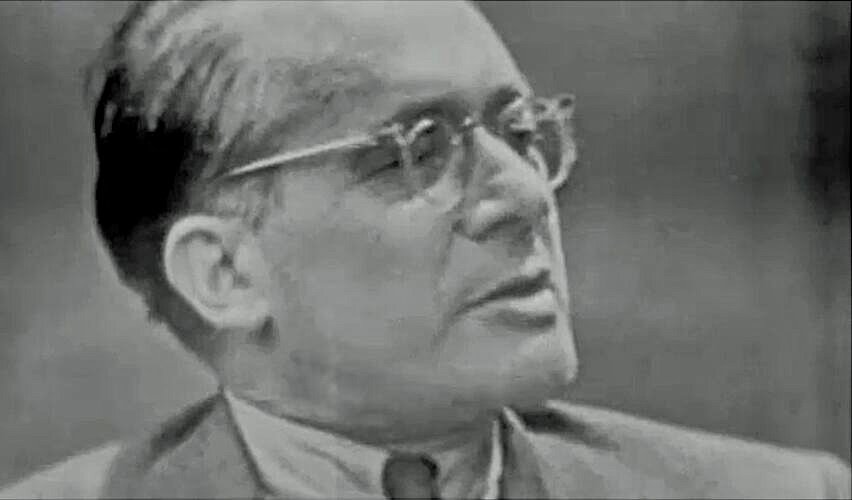 Raphael Lemkin and the word genocide
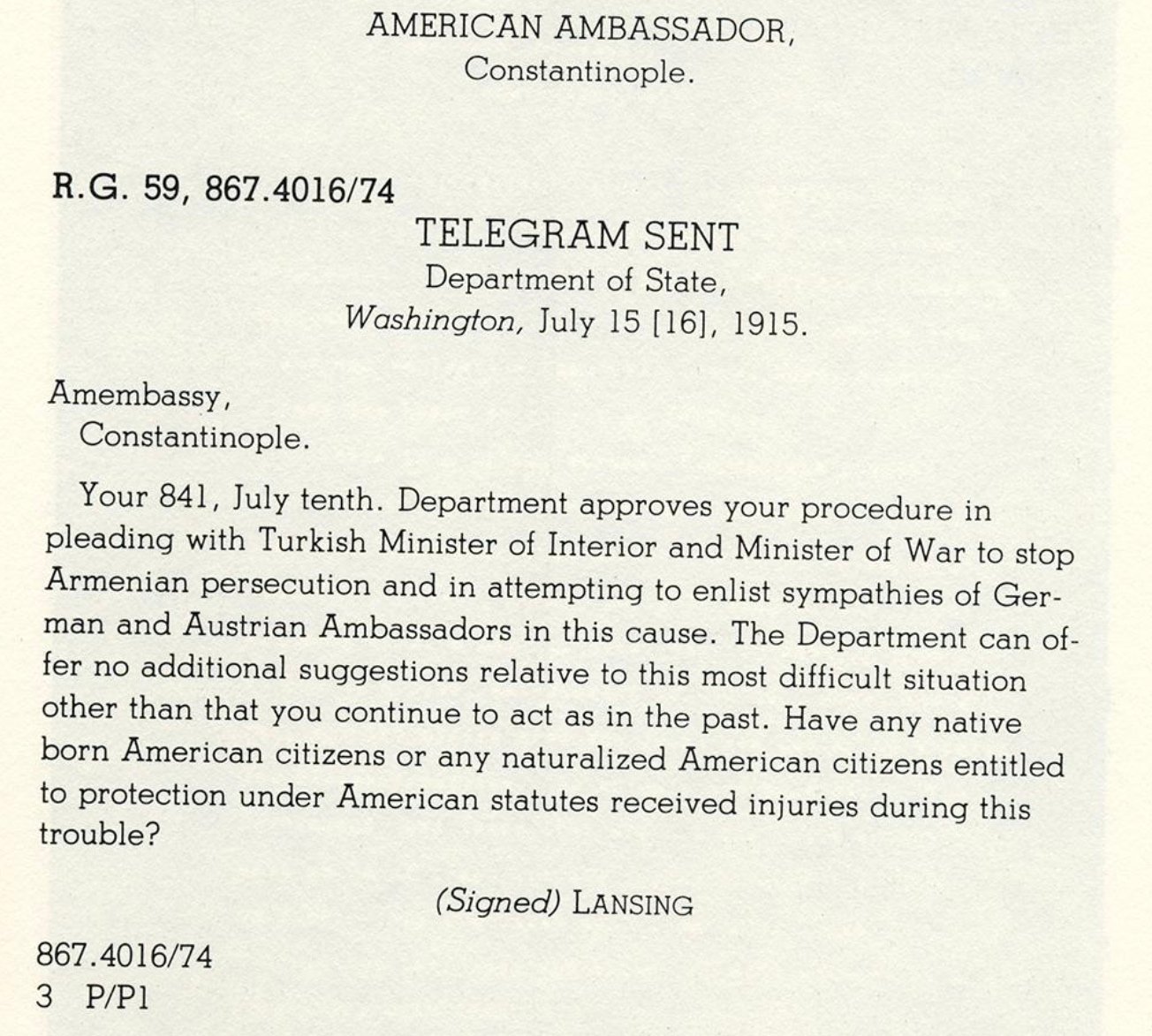 American diplomatic telegram, 1915
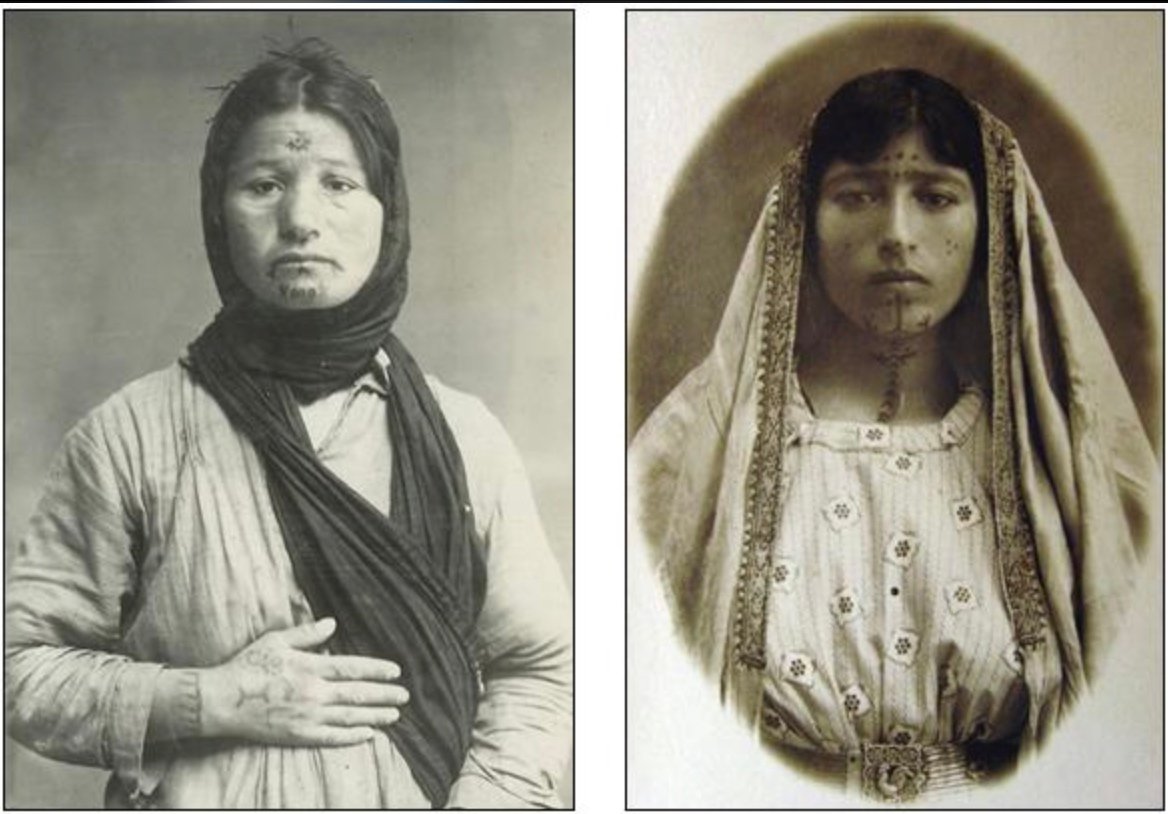 Armenian women and forced captivity
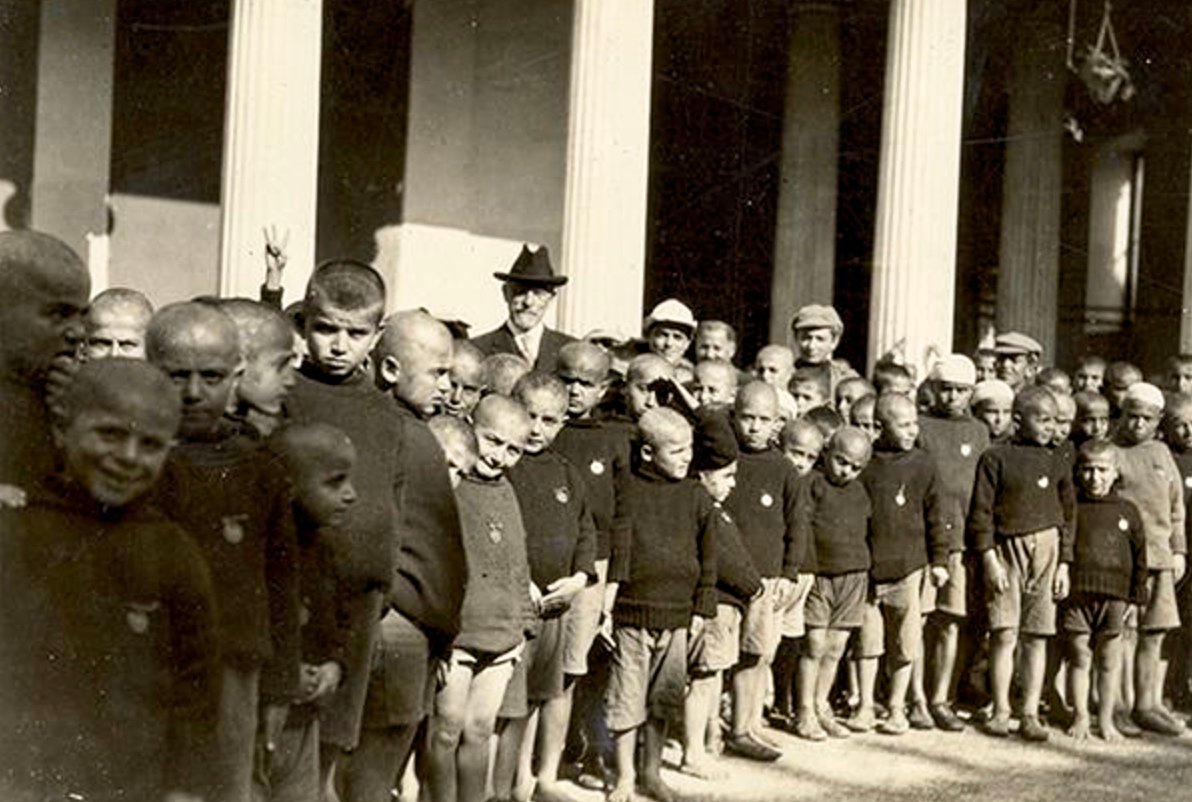 Armenian orphans and the Armenian Genocide
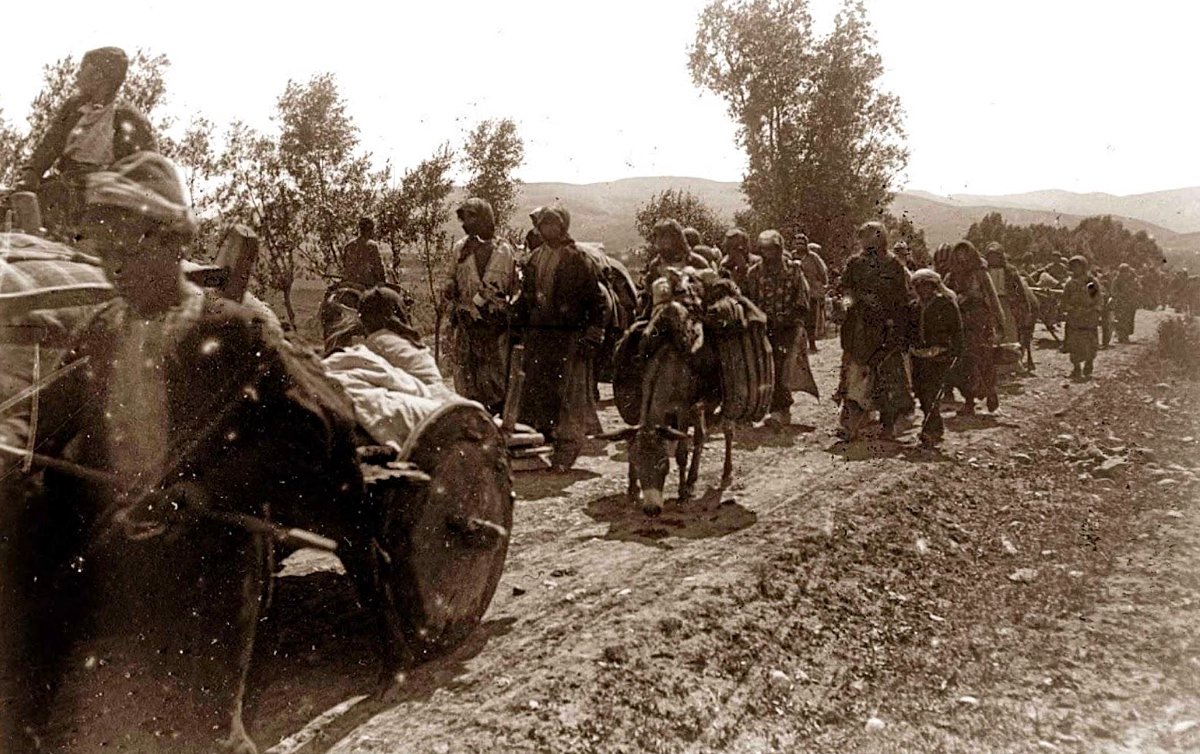 Armenian deportation convoy
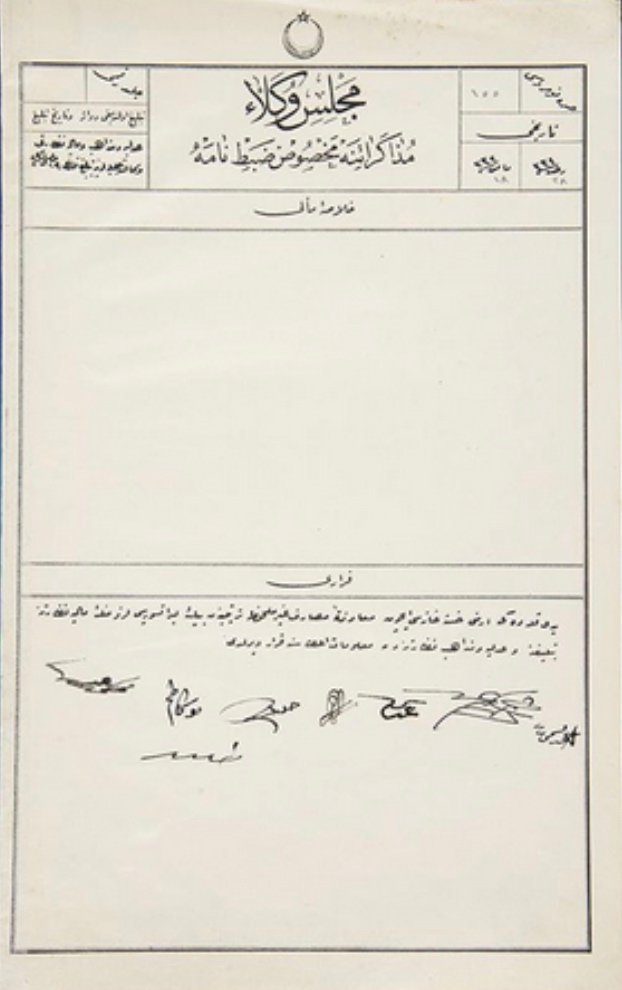 Confiscation of Armenian property in the Ottoman Empire
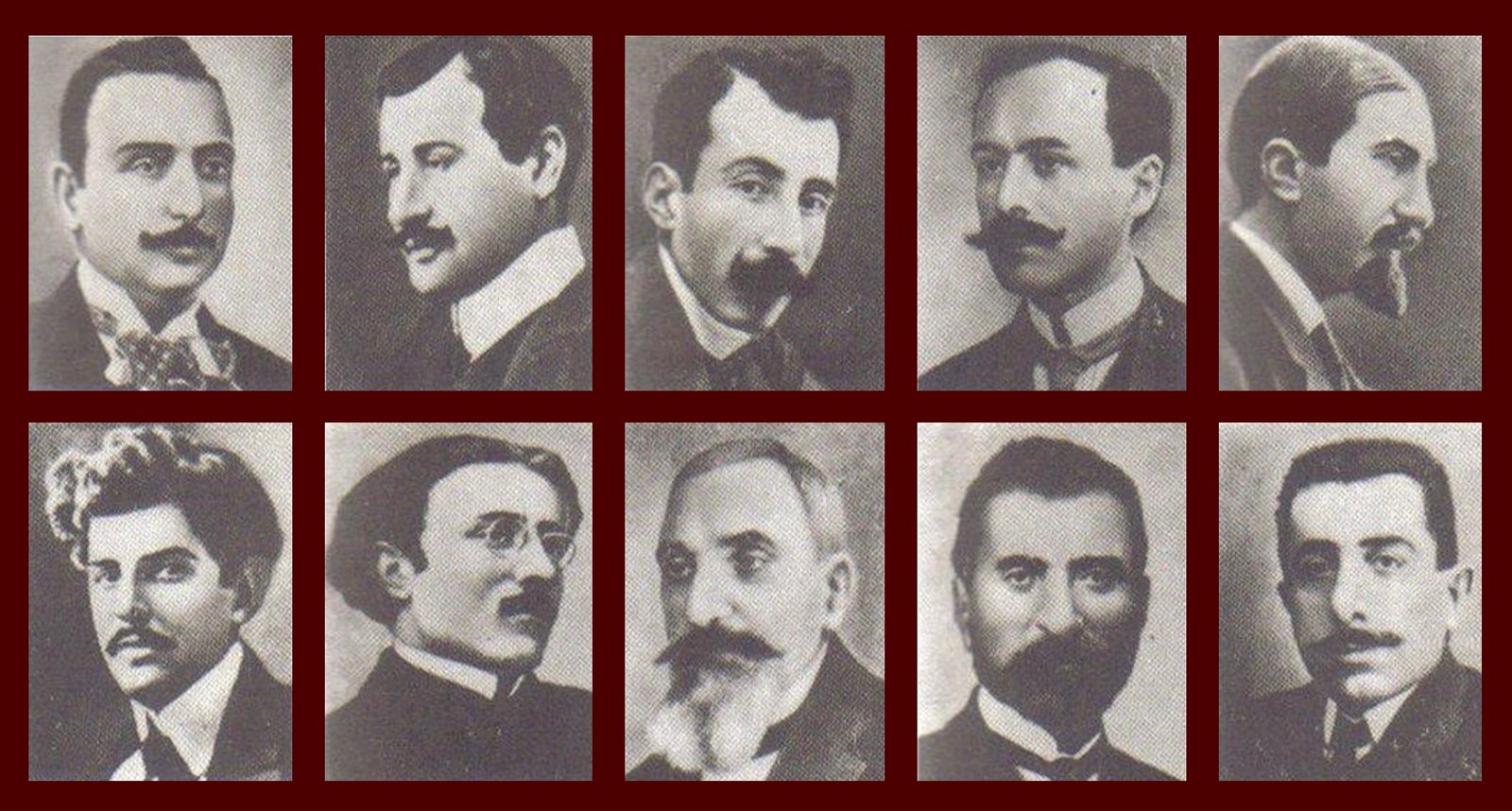 Armenian intellectuals and the Armenian Genocide
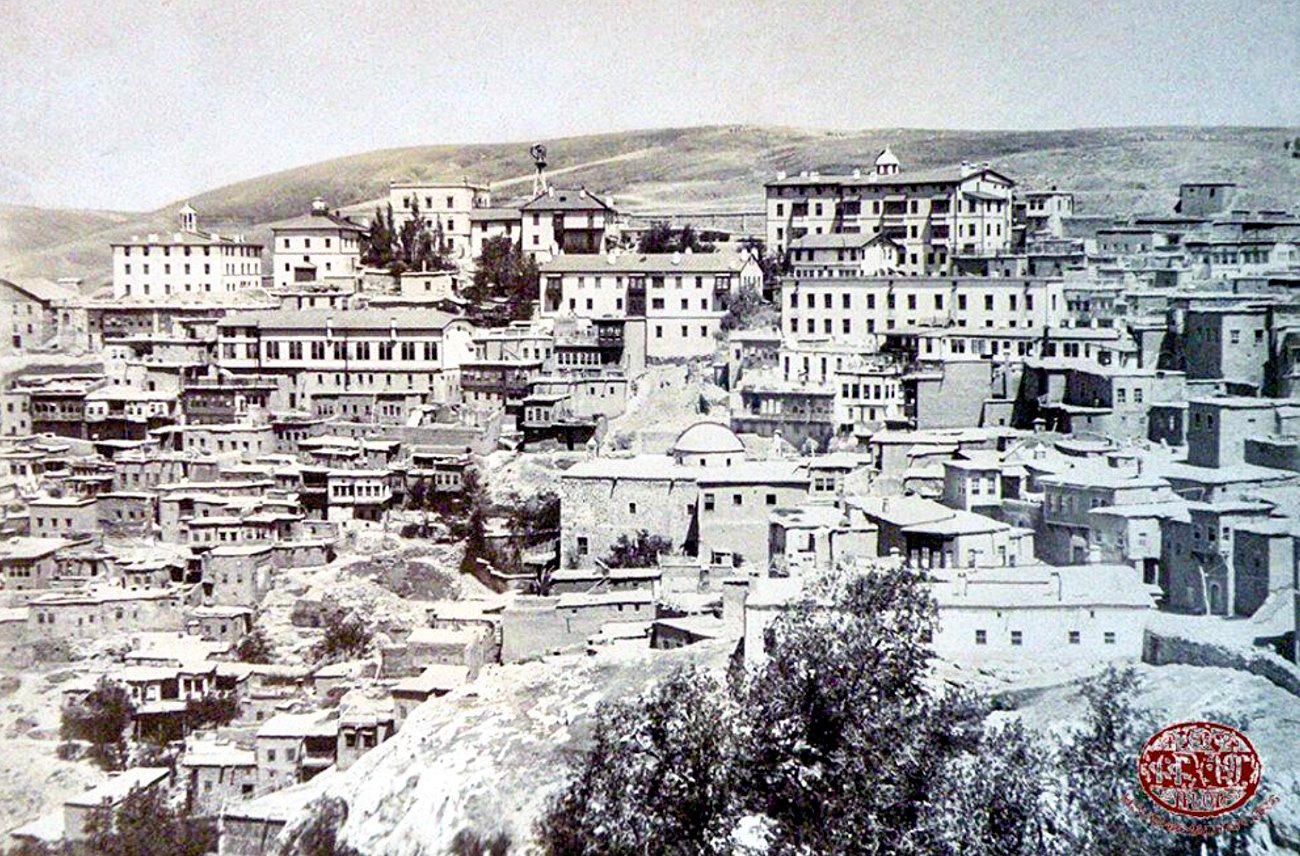 Armenian community before the Genocide
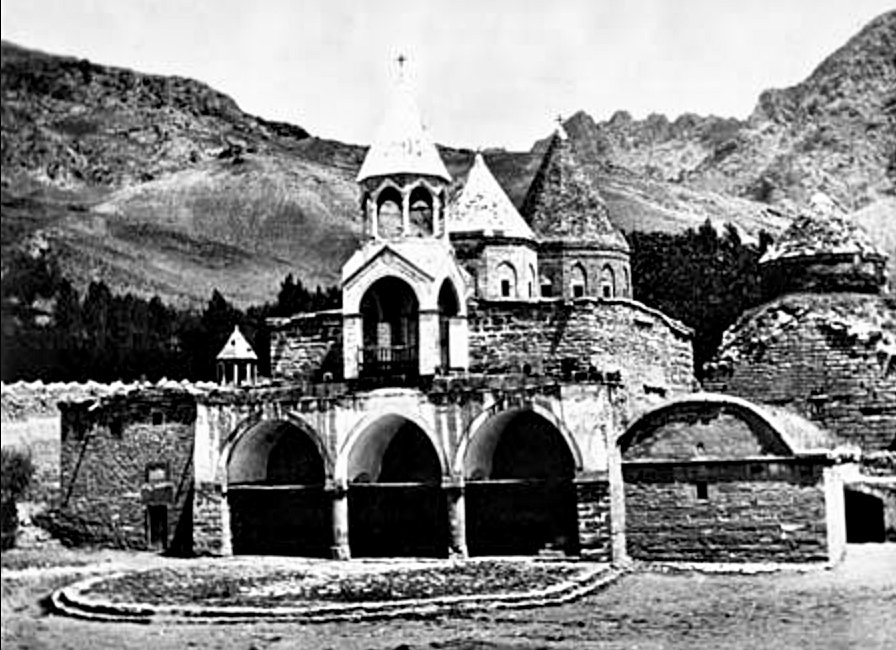 Armenian ecclesiastical heritage
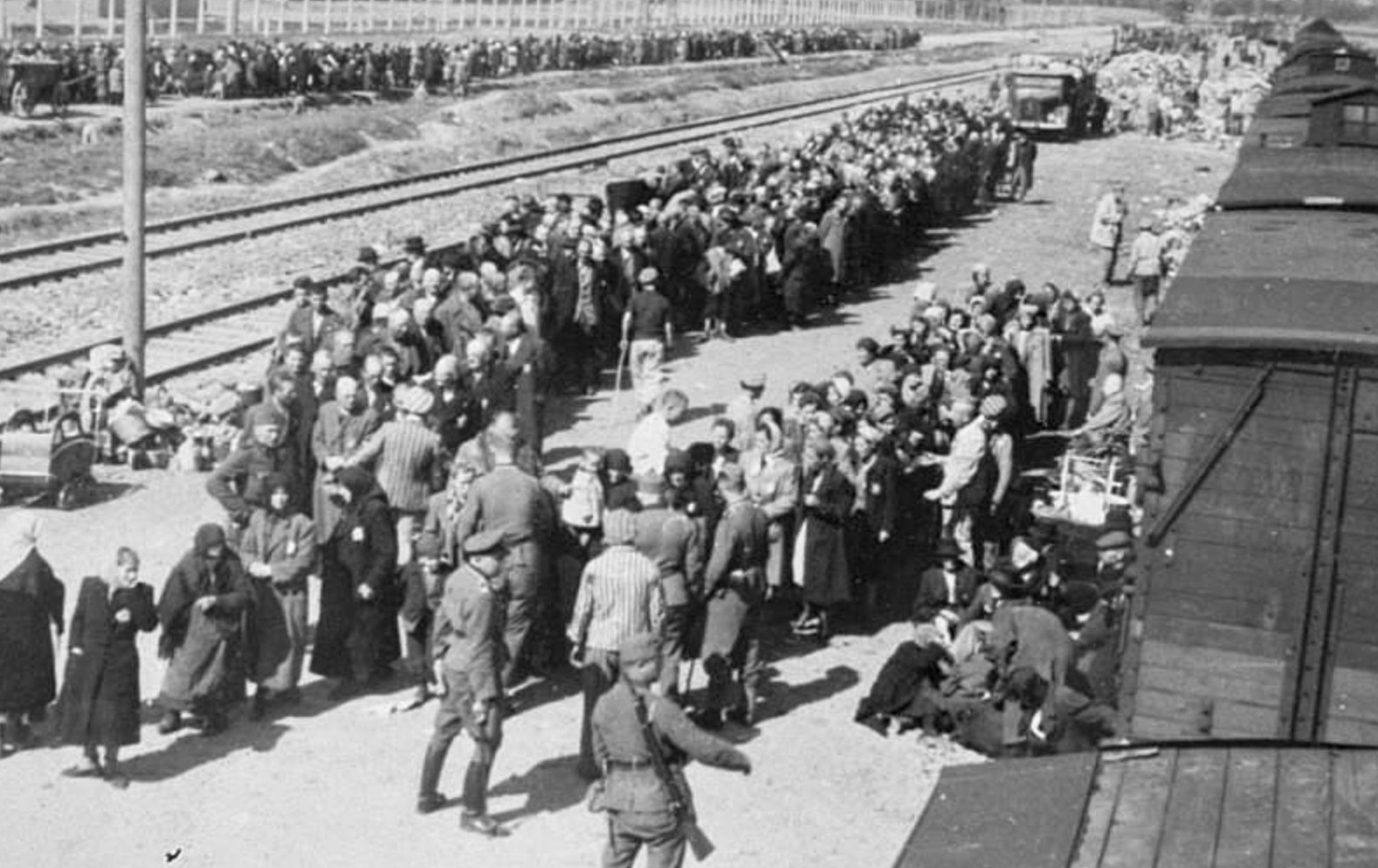 The Holocaust — Nazi genocide of European Jews
Explore the investigation
Browse all 20 chapters
01 / Research chapter
What is genocide?
Genocide is a crime directed at the existence of a protected human group. Under international law it requires both a prohibited act and the specific intention to destroy a national, ethnic, racial or religious group, entirely or in a substantial part. It can occur in peace or war. A death toll alone cannot establish that intention. [1]
The Armenian Genocide of 1915–1923 provides the central historical case for this investigation. AGMC commemorates 1.5 million Armenian victims across that period. Estimates differ according to the dates, territory and population studied; the Holocaust Encyclopedia, for example, uses a narrower 1915–1916 scope. [2] The broader question is how a campaign against a people affects not only the lives taken but also the opportunities of those who survive.
A useful distinction is between the legal elements of genocide, the mechanisms that enable it, and its enduring consequences. This study calls the relationship between these three layers the architecture of genocide. It does not propose that every injury to a community is independently a genocide.
Read the full research analysisCollapse research analysis
The legal meaning of group destruction
The question “what is genocide?” cannot be answered simply by counting the deceased. The object of the crime is a protected group, and the conduct must be understood in relation to the intention directed against that group. A murder investigation asks who was killed and by whom; a genocide investigation additionally asks why membership in a particular community determined the victim’s exposure to destruction. The distinction is essential when examining the Armenian Genocide: a household’s civilian status, geographical distance from a battlefield or individual political conduct did not necessarily protect it from measures directed at Armenians collectively.
The 1948 Convention identifies several routes through which group destruction can be pursued. Its inclusion of destructive living conditions and child transfer demonstrates that a legal investigation cannot be confined to execution sites. Records of displacement, confinement and deprivation must be examined alongside records of killing. The relevant question is whether the conduct and accompanying intention satisfy the treaty’s requirements, not whether every victim experienced the same mechanism. [1]
A historical designation is also distinct from a criminal judgment against a particular defendant. The Armenian Genocide predates the Convention, and describing the events through the modern historical category does not imply that a treaty adopted in 1948 was in force in 1915. An assessment of individual criminal liability would require its own jurisdictional and evidentiary analysis. This distinction allows historical recognition without confusing it with a retrospective court proceeding.
Our proposed architecture separates three levels: the criminal act, the surrounding system that makes it possible, and the subsequent loss of opportunities. Imagine a family whose members are deported, whose home is confiscated and whose surviving child receives a different recorded name. These are connected events rather than three interchangeable legal offences. A researcher should establish each event independently before assessing the relationship. This approach also prevents the consequences experienced by descendants from being mistaken for proof of a particular perpetrator’s intent.
02 / Research chapter
Before genocide had a name
The Armenian massacres of the late nineteenth century and the Adana massacres of 1909 preceded the organized destruction that began in 1915. These episodes should be considered in their own political contexts rather than treated as identical events. They nevertheless expose an important question: how could violence against a population become increasingly acceptable to institutions responsible for its protection?
The history of naming is also a history of recognition. Before an international legal category existed, observers relied on descriptions of massacres, extermination and atrocities. These descriptions are not inferior evidence merely because they predate the modern vocabulary. Researchers must recover what observers knew at the time, not demand that they anticipate the language of later law.
The distinction matters for archival searching. A search for genocide in a digitized newspaper from 1915 will miss most contemporary coverage. Searching the period vocabulary, spelling variants and place names can recover records that modern terminology conceals.
Read the full research analysisCollapse research analysis
The historical vocabulary of destruction
The late Ottoman history of persecution cannot be reconstructed as though every event inevitably led to 1915. The Hamidian massacres in the 1890s unfolded under a different political leadership from the Adana massacres of 1909 and the wartime policies of the Committee of Union and Progress. Historical comparison should examine changes in state authority, local participation and possibilities for protection rather than flatten these events into a single uninterrupted operation.
A particularly revealing research question concerns the relationship between violence and protection. A community can remain economically productive, maintain religious institutions and participate in public life while suffering unequal security. The presence of flourishing Armenian institutions before 1915 is therefore not evidence that persecution was absent. Conversely, an earlier massacre does not establish the intentions of every later official. The relevant historical work is to establish the continuity or discontinuity of particular policies and actors.
The vocabulary of contemporary reporting offers another window into this history. A researcher might encounter Armenian place names rendered differently in English, French, Ottoman Turkish and Armenian records, or discover that a report identifies people by religion rather than nationality. Modern search engines tend to retrieve familiar terms, making less familiar nineteenth-century descriptions harder to discover. A multilingual search must preserve original terminology while also providing standardized modern subject headings.
AGMC proposes treating each contemporary description as a dated observation. The record should identify the author’s location, the date of composition, publication date, intended audience and access to witnesses. A newspaper reprinting a dispatch is not necessarily an independent confirmation of that dispatch. Mapping the circulation of reports could distinguish the spread of knowledge from the geographical spread of violence. This is a research programme, not a completed survey of the nineteenth-century press.
03 / Research chapter
Holocaust before the Holocaust
On September 10, 1895, the New York Times published a report titled “Another Armenian Holocaust,” as documented in the International Journal of Armenian Genocide Studies. [7] The word was already part of the English language; the significance lies in its early application to the destruction of Armenians, not in a claim that Armenians were its first referent.
A 1913 book by Frederick Zacheus Duckett Ferriman used holocaust in its title when describing the 1909 Adana massacres. [11] These references establish an important bridge between the vocabulary of nineteenth-century atrocity reporting and twentieth-century genocide studies. Alan Whitehorn also identifies repeated uses in reporting on Armenians before and after 1915. [6]
Today the Holocaust is the proper historical designation for the Nazi genocide of European Jews. Historical lowercase usage and the modern proper name should not be confused. The study preserves both the Armenian record of early terminology and the specificity of Jewish history.
For an archival investigation, a headline establishes that a term circulated by a particular date. It does not establish that all readers understood it in the same way. A future corpus of original newspaper scans could record date, publication, language, place and the event described, showing how the vocabulary changed without asserting an unverified first use.
Read the full research analysisCollapse research analysis
Tracing the word holocaust through historical newspapers
Historical language has two different timelines: the date on which an event occurred and the date on which people described it. The Armenian examples cited above establish that the word holocaust was applied to Armenian suffering well before the Nazi genocide. They do not establish that the word was coined for Armenians. Its older religious and figurative meanings make any such assertion untenable without a much broader lexical investigation. [6] [7] [11]
The most useful contribution of a museum corpus would be to distinguish an article’s headline from its body, a contemporary account from a later republication, and an original report from syndicated copies. A headline may have been chosen by an editor rather than the correspondent. The headline and text should therefore be transcribed separately, with uncertain letters retained as uncertain rather than silently corrected. A digitized search hit must be compared against the page image before it is admitted as evidence.
The proposed corpus would record whether holocaust describes a single locality, a sequence of massacres or the destruction of an entire population. It would also record surrounding terms, such as massacre or extermination, without assuming these were used as legal categories. This makes the historical semantic change a subject of inquiry rather than a competition over ownership of a word.
The Holocaust remains the established proper name for the Nazi genocide of European Jews. A study of early Armenian usage enriches historical understanding without diminishing the specificity of the Holocaust. The appropriate classroom question is not which people have greater entitlement to the word but how observers responded to group destruction before the legal concept of genocide existed. AGMC has not yet assembled an exhaustive corpus and does not claim a verified earliest occurrence.
04 / Research chapter
Raphael Lemkin and the origins of genocide law
Raphael Lemkin was a Polish-Jewish jurist whose thinking was shaped by the destruction of Armenians and by other episodes of group persecution. His 1944 book Axis Rule in Occupied Europe introduced the word genocide in the context of Nazi occupation. His efforts helped secure adoption of the Genocide Convention on December 9, 1948. [3]
Lemkin’s historical significance is not limited to vocabulary. His conception considered the structures through which a group maintains its existence. Peter Balakian’s research places the Armenian experience of attacks on culture and identity within this intellectual history. [4]
The treaty that emerged is narrower than some of Lemkin’s original thinking. That difference provides the starting point for this study: legal precision and a full historical account are complementary, but they are not interchangeable. The law identifies criminal acts and intent; historical investigation can examine a wider range of injuries and their relationships.
Read the full research analysisCollapse research analysis
From the destruction of a society to international law
Lemkin’s intellectual achievement was to connect attacks on people with attacks on the structures that make collective existence possible. His 1944 work arose from the study of occupation, where measures affecting economic organization, education, political institutions and population could operate in combination. Peter Balakian’s scholarship identifies the Armenian experience as important to understanding Lemkin’s treatment of cultural destruction. [3] [4]
The difference between Lemkin’s broader conception and the adopted treaty is not a defect that a museum can remedy merely by announcing a new definition. International agreements emerge from negotiations, and their operative provisions determine the legal obligations they create. Historical scholarship may nevertheless describe consequential harms that do not independently meet the criminal definition.
Consider the destruction of a school. It can be studied as damage to property, interruption of education, loss of institutional memory and, in an appropriate factual context, evidence relevant to a wider campaign. The existence of these harms does not by itself establish genocidal intent. The investigator must examine the act in conjunction with evidence of the targeted group, the perpetrators and the wider conduct.
The seven dimensions developed in this study are best understood as a research ontology: a way of organizing evidence so that an investigation does not stop at the first category in which a document fits. A school register may contain information about teachers, language, family relationships and geographical origin simultaneously. Linking these dimensions preserves connections that would be lost in a collection organized exclusively by document format. The framework extends the museum’s interpretive practice rather than claiming to replace Lemkin’s theory or international law.
05 / Research chapter
Genocide and other international crimes
Article II identifies five categories of conduct: killing, grave physical or psychological injury, deliberately destructive living conditions, measures intended to stop births, and compulsory transfer of children to another group. Each requires the special genocidal intention. [1]
Mass murder can occur without that intention. Crimes against humanity concern specified acts within a widespread or systematic attack against civilians; war crimes concern serious violations of the laws applicable to armed conflict. Ethnic cleansing describes forcible removal and may overlap with genocide when the required acts and intention are present.
The difference is not a hierarchy of human suffering. A victim of a crime against humanity deserves justice regardless of whether the legal elements of genocide are established. Accurate classification helps investigators identify what must be proved and prevents terminology from substituting for evidence.
Read the full research analysisCollapse research analysis
Comparing offences without ranking suffering
The same historical episode may raise questions under several international criminal law categories. The legal classification depends on the elements of each crime, not simply the intensity of public outrage. For a deportation, an investigator may need to examine the broader civilian attack, the connection to an armed conflict, the treatment of the displaced and the intention behind the removal. Different findings may support different offences. [1]
Genocidal intent is distinguishable from a motive such as territorial acquisition, economic gain or purported security. A motive may help explain why an actor pursued a policy, but it does not settle whether that actor intended group destruction. Multiple motives may coexist. An investigator must assess contemporaneous statements, patterns of conduct and the treatment of people whose individual circumstances differ.
The United States Holocaust Memorial Museum’s legal overview explains that substantiality is not a fixed numerical threshold. The targeted part’s relationship to the wider group can matter, including its significance for collective survival. This helps students understand why an exclusively numerical definition would be misleading. [12]
For classroom inquiry, four questions are useful: Who is the target? What conduct is established? What context does the applicable offence require? What evidence supports the necessary mental element? Students should not be asked to simulate a perpetrator or assign criminal liability to a living ethnic community. The aim is to understand standards of evidence and the distinct purposes of historical interpretation and legal adjudication.
06 / Research chapter
The seven dimensions of destruction
The framework below is a proposed AGMC interpretive synthesis, not a validated index or a claim to have discovered seven previously unknown mechanisms. Claudia Card’s account of social death offers an important precedent for thinking about the loss of relationships that sustain collective identity. [5] The distinct contribution here is to organize those relationships into a practical evidence matrix that can be applied to Armenian historical records.
The dimensions are simultaneous and overlapping. A single deportation may affect life, family, land and property. Counting each consequence as a separate victim would inflate the evidence. Instead, the framework records one event and links it to every relevant dimension.
Interactive research framework
The Architecture of Genocide
Select a dimension to examine its meaning and historical evidence.
Human life
Physical violence and destructive living conditions. Examine deaths, injury, exposure and deprivation through death records, eyewitness testimony, orders and medical evidence. The removal of a caregiver also affects dependants, making direct violence a source of further vulnerability.
Explore the chapterFamily & generations
Separation, abduction and interrupted kinship. Examine missing relatives and disrupted parent-child relationships through family registers, rescue records, testimony and correspondence. Children deprived of relatives may also lose access to language, family history and inherited property.
Explore the chapterIdentity & language
Coercive conversion, renaming and assimilation. Examine loss of access to chosen identity and linguistic transmission through personal testimony, institutional records and changes in recorded names. Identity suppression can conceal the very connections needed for family reunification.
Explore the chapterLand & belonging
Forced displacement and barriers to return. Examine loss of residence, neighbourhood and access to community sites through maps, deportation records, property documents and travel accounts. Displacement separates households from material resources and shared institutions.
Explore the chapterEconomic existence
Confiscation and exclusion from livelihoods. Examine loss of homes, enterprises and inherited assets through inventories, title records, official regulations and compensation files. Loss of resources can prevent return and constrain access to education and independent work.
Explore the chapterCulture & institutions
Destruction of schools, religious institutions and leadership. Examine interruption of teaching, worship and cultural production through school registers, institutional directories, manuscripts and building surveys. The loss of teachers and institutions limits the transfer of skills and records.
Explore the chapterMemory & evidence
Suppression, disappearance and distortion of historical records. Examine gaps in documentary continuity and public recognition through catalogues, archives, testimony and documented alterations. Missing evidence can obstruct restitution, family searches and accountability.
Explore the chapter01 · Human life
Physical violence and destructive living conditions. Examine deaths, injury, exposure and deprivation through death records, eyewitness testimony, orders and medical evidence. The removal of a caregiver also affects dependants, making direct violence a source of further vulnerability.
02 · Family and generations
Separation, abduction and interrupted kinship. Examine missing relatives and disrupted parent-child relationships through family registers, rescue records, testimony and correspondence. Children deprived of relatives may also lose access to language, family history and inherited property.
03 · Identity and language
Coercive conversion, renaming and assimilation. Examine loss of access to chosen identity and linguistic transmission through personal testimony, institutional records and changes in recorded names. Identity suppression can conceal the very connections needed for family reunification.
04 · Land and belonging
Forced displacement and barriers to return. Examine loss of residence, neighbourhood and access to community sites through maps, deportation records, property documents and travel accounts. Displacement separates households from material resources and shared institutions.
05 · Economic existence
Confiscation and exclusion from livelihoods. Examine loss of homes, enterprises and inherited assets through inventories, title records, official regulations and compensation files. Loss of resources can prevent return and constrain access to education and independent work.
06 · Culture and institutions
Destruction of schools, religious institutions and leadership. Examine interruption of teaching, worship and cultural production through school registers, institutional directories, manuscripts and building surveys. The loss of teachers and institutions limits the transfer of skills and records.
07 · Memory and evidence
Suppression, disappearance and distortion of historical records. Examine gaps in documentary continuity and public recognition through catalogues, archives, testimony and documented alterations. Missing evidence can obstruct restitution, family searches and accountability.
Read the full research analysisCollapse research analysis
A relational evidence matrix
The analytical value of seven dimensions lies in their connections. A forced departure can begin a sequence in which access to a school ends, family property is transferred, relatives are separated and records become inaccessible. The proposed matrix records the departure once, then attaches separately evidenced consequences. It does not add the seven dimensions together into a severity score.
The smallest practical unit is an evidenced event involving a person, household, institution or place. Each record should contain a stable identifier, date or date range, historical location, source reference, affected entity and a short account of what the evidence actually establishes. A relationship between records should include its own justification. Two documents mentioning the same surname are not sufficient to establish kinship.
Three confidence categories can organize subsequent review: documented, supported inference and unresolved. These categories describe the evidence for a specific relationship, not a numerical probability that genocide occurred. A researcher may be certain that a school existed while remaining uncertain about the date of its closure. Keeping those judgments separate prevents confidence in one fact from spilling into unrelated claims.
For example, a hypothetical household appears in a prewar register and a later relief list. The first record provides a baseline, the second establishes the presence of a possible survivor, and additional identity evidence would be needed to link them. A property inventory could then establish an asset relationship independently. The combination might illuminate multiple dimensions, but the case must remain hypothetical until actual records are assembled.
This is AGMC’s proposed contribution: a transparent, relationship-based method for studying destruction and survival together. Existing scholarship on social death and cultural destruction remains fundamental to the approach. [4] [5] No completed database or validated measurement instrument is claimed.
07 / Research chapter
The administrative machinery of genocide
A diplomatic telegram from Henry Morgenthau dated July 10, 1915, provides a contemporary entry point into the study of coordination. The ambassador reported geographically dispersed persecution and attributed its direction to the capital. [8] A diplomatic report is a situated observation, not a complete administrative archive. Its value grows when independent local evidence corroborates it.
An investigation should distinguish the authority that issued an order, the officials who transmitted it, the people who implemented it, and the institutions that benefited. These are different roles; responsibility must be assessed through evidence of individual conduct and authority rather than ethnicity.
Records produced for ordinary administration can become evidence of an extraordinary crime. A population return or property inventory may not openly disclose the ultimate objective. The researcher must compare its timing, implementation and consequences with other records. The central question is what administrative decisions meant for the people subject to them.
Read the full research analysisCollapse research analysis
Administration as historical evidence
An administrative document often has several audiences. A local official may need instructions about transport, a central authority may demand a numerical report, and another agency may record property left behind. The significance of such documents emerges from comparison across their institutional purposes. A property list cannot automatically establish the fate of the people who owned its contents.
The Holocaust Encyclopedia describes central coordination and monitoring by the Committee of Union and Progress during the Armenian Genocide. Its account identifies the collection of population and property information alongside deportation. [2] For this investigation, these administrative categories are important because they enable researchers to compare policy with local outcomes, not because a bureaucratic appearance alone proves criminal intent.
The July 1915 Morgenthau telegram can be read as a contemporaneous assessment of coordination. [8] A research dossier should identify where the ambassador obtained information and seek independent accounts from the places mentioned. Diplomatic correspondence can be unusually valuable for establishing what foreign governments knew at particular dates, while remaining incomplete as an account of every locality.
A proposed administrative chronology would arrange documents by issue date, receipt date and known implementation date. Gaps between these dates may reveal delays or differences in local conduct. Responses differing from the central policy deserve preservation, including evidence of resistance and assistance. This protects the historical distinction between institutional responsibility and collective blame. The resulting chronology would support analysis of responsibility without claiming to identify every actor from a single document.
08 / Research chapter
When survival does not mean freedom
Physical survival is not evidence that an attempt to destroy a group failed to constitute genocide. Nor should survivors be described as socially dead simply because they were separated from their origins. They retained agency, relationships and the capacity to create meaningful lives under radically altered conditions.
The research question is whether survival was made conditional upon surrendering connections that people would otherwise have been free to maintain. Forced conversion or separation can reveal that distinction. A person may adapt to survive without consenting to the circumstances that required adaptation.
This chapter distinguishes survival, freedom, family reunification and cultural continuity. None can be assumed from another. A record showing a person alive establishes survival at a particular date, not the full history of that person’s identity or wishes.
Read the full research analysisCollapse research analysis
Survival, autonomy and the recovery of identity
Survival records answer a narrow but indispensable question: whether someone was recorded alive at a particular time. They do not necessarily establish whether the person could leave a household, communicate with relatives, retain a name or practise a religion freely. The distinction is especially significant in studying captivity and forced assimilation during the Armenian Genocide.
Ekmekcioglu’s study of wartime transfer and postwar recovery highlights the political and institutional context within which women and children were moved between communities. [9] A museum account must distinguish the intentions of institutions from the experiences of individual survivors. A recovery organization may describe an event as a rescue, but its terminology cannot substitute for evidence of the person’s own wishes.
The proposed record therefore separates four questions: physical survival, freedom of movement and decision, access to family relationships, and opportunities to maintain a chosen identity. Each can change over time. A record from one year cannot automatically establish conditions in another. Nor should an altered name be treated as definitive evidence of coercion without a supporting context.
This framework recognizes survival as an achievement while refusing to erase the conditions under which it occurred. It also avoids measuring descendants’ authenticity by language, religion or surname. The historical harm lies in coercion and the loss of choice, not in a survivor’s later choices. Researchers should retain uncertainty about individual histories and respect the privacy of living descendants wherever records contain sensitive family information.
09 / Research chapter
Women, children and the destruction of generations
Research by Lerna Ekmekcioglu considers the forced movement of Armenian women and minors into other communities and the partial reversal of that process after the war. [9] This scholarship directs attention toward coercion, recovery and the contested meaning of belonging.
The forcible transfer of children has an explicit place in the Genocide Convention. [1] Evidence involving adults requires separate analysis of the relevant acts and intent. Gendered violence must be investigated without treating women merely as instruments of demographic reproduction. Their autonomous decisions, testimony, labour and intellectual contributions belong within the historical record.
A responsible museum distinguishes a documented rescue from an assumption about an individual’s preferred identity. Names, photographs and personal information should be presented with attention to provenance and dignity. The objective is to recover people’s histories, not to reduce them to illustrations of a theory.
Read the full research analysisCollapse research analysis
Tracing interrupted kinship across generations
The destruction of a household can produce consequences that outlast the immediate violence without requiring a speculative calculation of nonexistent descendants. A child separated from parents may lose knowledge of birthplace, relatives and family property. An adult survivor may spend years searching for siblings. Those losses can be studied through particular relationships rather than an abstract assumption that every survivor experienced them alike.
The study of Armenian women and children must also recognize their role in rebuilding collective life. Women were witnesses, workers, educators and organizers, as well as victims of persecution. Their testimony can reveal forms of coercion and recovery that official population records conceal. A history restricted to counts of births and deaths would miss much of this contribution.
A family reconstruction dossier could combine a prewar household list, correspondence, a relief institution’s record and a later testimony. Names should be transcribed in their original scripts where possible, with spelling variants retained. Estimated ages and uncertain relationships should not be converted into exact dates or definitive genealogical connections. [9]
Forcible transfer of children is expressly addressed in the Genocide Convention, but historical documentation of a child’s institutional placement does not by itself establish every element of that crime. [1] The surrounding circumstances and evidence of intention remain important. The proposed kinship method complements legal analysis by identifying what relationships were interrupted, what was recovered and what remains unknown.
10 / Research chapter
When geography becomes a weapon
A map can document more than the location of violence. It can show how removal changes access to wells, food, medical services, shelter, relatives and institutions. The geography of survival is therefore different from the geography of a route.
For Armenian deportations, a map-based investigation should distinguish the place of origin, known transit points, intended destinations and independently documented outcomes. Straight lines between locations must not be presented as verified routes. Dates matter: two convoys leaving the same town may have encountered entirely different conditions.
The museum’s interactive atlas provides a complementary starting point for recovering the geography of Armenian life. Explore Armenian Life Before 1915. In future analysis, locations should be matched to their historical names and administrative boundaries before comparing them with present-day geography.
Read the full research analysisCollapse research analysis
The geography of access and displacement
A deportation map usually represents movement between locations. A complementary map would represent the resources and relationships that existed at the place of origin: homes, water sources, markets, schools, religious institutions and relatives. The difference between the two maps helps explain why forced removal is more than a change of address.
For the Armenian Genocide, documentation of origin, transit and destination should remain distinct. The fact that a location was a known deportation destination does not establish that a particular family reached it. A route drawn from a historical account must preserve the uncertainty of its intermediate stages rather than invent a continuous itinerary. The museum’s atlas can assist with historical place identification, while documentary sources must establish individual movements.
A useful research concept is access loss. It asks which previously available resources became inaccessible after a documented displacement. Some losses can be established directly, such as the separation of a household from a known residence. Others require evidence of subsequent barriers, including restrictions on return, occupation of property or the disappearance of an institution. These categories should not be converted into a universal numerical score.
The method also distinguishes environmental exposure from responsibility. Heat, cold and scarcity are conditions; the historical inquiry concerns decisions that subjected people to those conditions and the opportunities for protection that were withheld. Contemporary records must establish those connections. [2] This makes geography an evidentiary component of the wider investigation rather than a decorative illustration.
11 / Research chapter
The economics of genocide
Confiscation changes the relationship between violence and its beneficiaries. Removing a family from its home can simultaneously deprive it of shelter, transfer an asset to another party and eliminate the basis of a future livelihood. That interaction is why economic evidence deserves independent examination.
An inventory is not a complete measure of loss. The value of a building differs from the income it could generate, and both differ from its importance to a family. Historical prices, contemporary replacement costs and hypothetical future earnings answer different questions. Combining them without a clear method risks double counting.
The museum’s Study 01: Armenian Wealth, Confiscation and Loss addresses these questions in greater detail. Here the focus is on the link between dispossession and the ability to re-establish collective life. A property claim can remain unresolved long after direct violence ends.
Read the full research analysisCollapse research analysis
Dispossession and the capacity to rebuild
Economic destruction has a stock and a flow dimension. A home, workshop or parcel of land is an asset; the shelter, goods or income it provides over time are services or flows. A historical valuation must distinguish the two or risk counting the same economic benefit twice. An asset valuation based on future expected earnings, for example, already incorporates an estimate of that income stream.
The Armenian Genocide also raises questions about who acquired control of resources after their owners were removed. An inventory can identify goods, but researchers need further evidence to establish the recipient, transfer date, consideration and subsequent ownership. A change in possession is not automatically equivalent to a complete legal title history.
The proposed household reconstruction would distinguish personal property, productive assets and communal property. A school’s assets cannot simply be allocated equally among every former pupil. Its destruction may instead represent a loss of access to an educational service. This distinction lets the museum document economic and institutional consequences without artificially inflating a financial total.
A second question is whether dispossession obstructed recovery. A survivor who cannot access a former home or business may face materially different options from one who can recover assets. This is a plausible relationship, not a measured causal estimate for all Armenians. The museum’s separate wealth study develops the valuation questions; this chapter addresses the links between economic loss, residence and community continuity.
12 / Research chapter
The destruction of intellectual life
The arrests of Armenian leaders in Constantinople on April 24, 1915, are a central commemorative marker of the Armenian Genocide. To understand intellectual destruction, however, a study must look beyond prominent names to the networks in which teachers, writers, physicians, clergy and publishers worked.
The death of an educator is first a human loss. It may also interrupt a school’s activities and the education of pupils who would never have met that educator outside the institution. These wider effects should be traced rather than presumed. School records, publications and correspondence can identify particular connections.
The framework therefore distinguishes the loss of an individual, the cessation of an institutional function and the loss of access experienced by others. Each is historically meaningful; none is a substitute for the others.
Read the full research analysisCollapse research analysis
Intellectual networks and institutional interruption
The loss of an intellectual cannot be captured fully by compiling a list of prominent victims. A teacher, editor or physician participates in relationships with students, readers, colleagues and institutions. Their removal may interrupt particular forms of public life, although the extent of that interruption must be documented rather than assumed.
The April 1915 arrests in Constantinople provide a starting point for reconstructing such relationships. Research on cultural destruction emphasizes the significance of attacks on Armenian intellectual and cultural life. [4] A network approach would trace documented employment, publications, memberships and correspondence. It would not speculate about unwritten books or undiscovered inventions as though they were known historical losses.
Consider an institution with several teachers. The death of one teacher is an individual loss; a subsequent closure is a separate institutional event; the relocation of students is a third event. Each requires its own evidence. The researcher can then ask whether closure followed directly from persecution, displacement, financial loss or a combination of factors. A school that reopened elsewhere should be recorded as relocated or reconstituted, not simply erased from the narrative.
This method gives ordinary educators and local institutions a place alongside celebrated figures. It also makes recovery visible through surviving publications and renewed organizations. The objective is to reconstruct a historical network sufficiently well to identify documented interruptions and continuities, rather than claim a numerical measure of lost intellectual potential.
13 / Research chapter
Language, identity and cultural survival
Language is a living relationship among speakers. A manuscript preserves words, but it cannot alone reproduce a community of conversation. The disappearance of a school or household can alter the circumstances in which children learn to speak, read and write.
Armenian survivors and their descendants rebuilt linguistic and cultural institutions in diaspora. Their achievements are evidence of resistance and renewal, not evidence that earlier losses were insignificant. Cultural change also arises through migration, voluntary choices and ordinary historical development; it must not automatically be attributed to genocide.
A Language Unbroken explores the living heritage of Western Armenian. Within the present framework, language preservation is an example of restoring opportunities for transmission without requiring survivors or descendants to conform to a single version of identity.
Read the full research analysisCollapse research analysis
Language as a living opportunity
The history of Western Armenian illustrates the difference between preserving a language’s documentary record and sustaining opportunities to use it. Books can survive when the communities that produced them have been dispersed. A language may also continue in new settings with changing forms and vocabulary. Neither documentary survival nor linguistic change alone proves the presence or absence of genocidal destruction.
A study of transmission should distinguish household conversation, formal schooling, publishing, religious practice and public use. These settings can change independently. A person may read Armenian without speaking it regularly, or speak it without having received formal instruction. Treating linguistic ability as a single binary variable conceals these differences.
The historical research question is whether documented coercion and displacement reduced access to particular opportunities for transmission. Other influences, including voluntary migration and education in different languages, must be considered. This prevents the history from attributing every subsequent linguistic change to one cause.
The museum’s Western Armenian exhibition offers a practical counterpart to the research by making literature and language resources available to contemporary learners. Such access cannot recreate the exact social world that existed before 1915. It can, however, expand present-day opportunities for people to encounter a heritage on their own terms. The achievement of survivors and descendants in creating new institutions belongs in the same account as the destruction of earlier ones.
14 / Research chapter
The evidence of absence
Absence becomes historically informative only when there is a defensible expectation that something should be present. A missing school in a modern directory is not enough. A researcher first establishes that the school existed, then looks for records of its closure, destruction, relocation or continued operation.
The same method applies to people, institutions and buildings. A prewar photograph can establish the appearance of a place at a given moment; a later photograph can document change. Neither establishes the cause or date of destruction without additional evidence.
This suggests a three-part test: establish the original presence, document the later absence or transformation, and investigate the causal bridge between them. Where the bridge is missing, the conclusion should remain provisional. This is a practical safeguard against both denial and exaggerated certainty.
Read the full research analysisCollapse research analysis
A protocol for investigating vanished communities
Absence requires a baseline. Without a record of what once existed, silence in a later archive can reflect incomplete cataloguing rather than destruction. AGMC proposes an evidence-of-absence protocol beginning with a dated record of original presence, followed by a later observation and a documented investigation of the intervening period.
The baseline should identify a particular entity: a named church, school, business, family or settlement. A photograph may establish appearance but not ownership; an institutional directory may establish a listing but not continuous operation. The next step is to define precisely what is missing in the later record. A church building may remain while its congregation has disappeared, or an institution may continue under a different name elsewhere.
The causal bridge is the hardest component. It requires examination of documented displacement, damage, confiscation, relocation or other relevant changes. Alternative explanations must be recorded. A modern photograph showing an empty field cannot independently establish when a building disappeared or why. A researcher should avoid treating restricted archival access as proof of deliberate destruction of a particular document.
The protocol produces a record of status rather than a binary verdict: present, transformed, relocated, documented destroyed, or unresolved. A single institution may have different statuses at different dates. This structure could be applied to the museum’s historical atlas and photographic archive. It is a proposed documentation method, not a claim that AGMC has already surveyed every Armenian settlement or discovered a previously unknown pattern.
15 / Research chapter
The Armenian Genocide and the Holocaust
The Armenian Genocide is widely studied as an important historical precedent for the Holocaust. The two histories share questions about state power, dehumanization, dispossession and the vulnerability of targeted populations, while differing in ideology, chronology, geography and implementation.
“Who, after all, speaks today of the annihilation of the Armenians?”
ADOLF HITLER · AUGUST 22, 1939
Recorded in Louis P. Lochner’s account of Hitler’s address to his military commanders shortly before the invasion of Poland, these words have become an enduring symbol of historical forgetting, impunity and the recurrence of genocide. The quotation appears in the L-3 document, although it is absent from other surviving accounts of the speech.
The Holocaust must be understood within its specific historical context as the Nazi genocide of European Jews. Recognizing the Armenian Genocide as a historical precedent does not diminish the distinct experiences of either people.
Raphael Lemkin’s development of genocide as a legal and historical concept provides another important intellectual connection between these histories. [3] Historical parallels illuminate the mechanisms of collective destruction, but specific claims of direct influence require independent documentary evidence.
Remembrance is not simply an obligation to the dead. It is a responsibility to future generations. When the destruction of a people disappears from public consciousness, an essential historical warning risks disappearing with it.
Read the full research analysisCollapse research analysis
Comparative genocide history without equivalence
The Armenian Genocide and the Holocaust must be studied within their distinct political and chronological contexts. Comparison becomes useful when it identifies a precise question rather than treating one history as a template for another. For example, a researcher may compare the use of administrative records or the relationship between dispossession and persecution while keeping differences in institutions, chronology and targeted populations explicit.
The Nazi genocide of European Jews involved a specific racial ideology and a campaign of destruction across occupied Europe. The Armenian Genocide unfolded within the late Ottoman and subsequent regional context. Common analytical categories do not establish identical methods or a direct causal relationship. Each historical claim requires evidence from its own case. [2] [3]
Other comparisons can illuminate particular legal questions. The Akayesu judgment concerning the genocide against the Tutsi in Rwanda clarified the relevance of sexual violence when accompanied by genocidal intent. [12] That legal development can inform how scholars understand the categories of harm without implying that the events in Rwanda and the Ottoman Empire were identical.
A comparative worksheet should record the targeted group, historical context, documented acts, evidence of intent, institutions involved and sources used. Unknown information should remain unknown rather than being borrowed from better-documented cases. This approach respects the specificity of each genocide and enables students to understand both recurring mechanisms and the limits of analogy.
16 / Research chapter
Measuring what genocide destroys
The proposed method uses an event register rather than a numerical genocide score. Each entry should identify the date or interval, location, affected people or institution, source, relevant dimensions, and the limits of what can be established.
A useful pilot could follow one documented Armenian locality through a prewar institutional directory, wartime reports and postwar survivor records. The unit of analysis would be a documented event or change, not a speculative count of all possible consequences. Findings should identify corroborated, single-source and unresolved observations separately.
Population scenarios illuminate a different kind of loss. Study 02 explores hypothetical growth paths. Such scenarios illustrate assumptions, not the number of people who would certainly have lived. They should not be added to observed deaths.
| Dimension | Observation | Evidence to seek |
|---|---|---|
| Human life | deaths, injury, exposure and deprivation | death records, eyewitness testimony, orders and medical evidence |
| Family and generations | missing relatives and disrupted parent-child relationships | family registers, rescue records, testimony and correspondence |
| Identity and language | loss of access to chosen identity and linguistic transmission | personal testimony, institutional records and changes in recorded names |
| Land and belonging | loss of residence, neighbourhood and access to community sites | maps, deportation records, property documents and travel accounts |
| Economic existence | loss of homes, enterprises and inherited assets | inventories, title records, official regulations and compensation files |
| Culture and institutions | interruption of teaching, worship and cultural production | school registers, institutional directories, manuscripts and building surveys |
| Memory and evidence | gaps in documentary continuity and public recognition | catalogues, archives, testimony and documented alterations |
Read the full research analysisCollapse research analysis
Measuring losses without inventing a future
A rigorous account of generational destruction distinguishes observed historical facts from counterfactual projections. A death record, a documented missing person and an estimated population under an alternative historical scenario represent different kinds of information. They should not be added together to produce a single victim total.
The museum commemorates 1.5 million Armenian victims of the Genocide. Any projection of future population requires assumptions about fertility, mortality, migration, geographical scope and the initial population. Those assumptions cannot be treated as historical observations. Even in the absence of genocide, populations change through many interacting causes. The separate AGMC population study provides a setting for examining alternative demographic scenarios.
A useful hypothetical illustration is a community with 100 documented households before displacement. If 60 households can be linked to later records, the remaining 40 are untraced in that collection. They are not automatically 40 destroyed households. Further searching may reveal relocation, name changes or records outside the initial archive. The example demonstrates why incomplete linkage must be separated from confirmed loss.
Future-oriented economic and cultural questions require comparable restraint. An estimate of potential income is not an observed asset loss; an unwritten book cannot be counted as a documented work. The proposed framework measures what can be evidenced and labels other outcomes as scenarios or unresolved questions. It is intended to make uncertainty visible rather than conceal it behind a precise-looking total.
17 / Research chapter
Impunity, denial and recurrence
Failure to hold perpetrators accountable can weaken deterrence and reinforce the perception that violence will be tolerated. It is a risk factor, not an inevitable law of history. The UN atrocity prevention framework addresses the broader institutional conditions that make recurring violence possible. [10]
Denial can compound the harms of genocide by obstructing recognition, historical education and access to remedies. It is important to distinguish intentional distortion from honest scholarly disagreement over dates, estimates or interpretation. Transparent evidence is the appropriate response to both.
The Armenian experience demonstrates why documentation and accountability belong in the same discussion. The comparative cases of the Holocaust and the 1994 genocide against the Tutsi in Rwanda illustrate the importance of prevention, without displacing the Armenian focus of this study.
Read the full research analysisCollapse research analysis
Denial as an obstruction to historical reconstruction
Denial can affect the practical ability of people to investigate family histories, establish property claims and access historical records. It should be studied not only as a public disagreement over terminology but also as a possible obstacle to documentary continuity. The existence of an obstacle and its cause must be established in each case.
A useful distinction is between a dispute about an individual record and denial of an established historical event. Historians may legitimately revise an attribution, date or estimate when new evidence appears. Such revision does not negate the wider evidentiary record of the Armenian Genocide. Conversely, selectively rejecting evidence because it contradicts a preferred conclusion is not equivalent to normal scholarly scrutiny.
An archive-based investigation could preserve the history of disputed descriptions, missing catalogue entries and changes in institutional access. A claim that a document was deliberately suppressed requires more evidence than an unsuccessful search. Researchers should record unsuccessful searches and their limitations without assigning motive automatically.
The museum’s educational treatment of denial can therefore be connected to practical historical literacy: identify the claim, locate its source, test its relationship to independently established facts and distinguish an unresolved detail from a wider conclusion. Accountability concerns documented individual and institutional conduct, not inherited guilt attached to ethnicity. This makes the study relevant to remembrance while preserving evidentiary discipline.
18 / Research chapter
Reconstructing a people’s future
A community is not simply the sum of the institutions it once possessed. Survivors can create new relationships, cultural forms and places of belonging. Recovery is therefore neither a return to an unchanged past nor a process that cancels historical loss.
Family reunification, access to archives, language education, restoration of heritage and the protection of human rights can expand the choices available to survivors and descendants. The seven dimensions suggest complementary areas of work, rather than seven compulsory tests of recovery.
The museum’s survivor testimonies and women’s history exhibition provide pathways to individual histories. The proper measure of remembrance is not conformity to a prescribed identity but the freedom to know and engage with one’s history.
Read the full research analysisCollapse research analysis
Reconstruction, continuity and survivor agency
Reconstruction after genocide does not mean reproducing an earlier society exactly. Survivors may establish new communities, enter new professions and develop new forms of cultural life. Their achievements are historical outcomes in their own right, not merely a measure of proximity to a prewar baseline.
A study of recovery should distinguish the restoration of a relationship from the creation of a new one. Family reunification may restore a previously interrupted connection; a new school may create educational opportunities where none previously existed. Both can be valuable even though they represent different historical processes.
The seven dimensions can be used to organize evidence of recovery as well as loss. Relief records may document access to shelter; school records may establish renewed education; literature and correspondence may reveal new cultural networks. A researcher should not infer that every member of a community benefited equally from a newly established institution.
The museum’s digital exhibits contribute to present-day access to historical evidence and cultural resources. This is not equivalent to restitution, family reunification or restoration of ancestral property. Maintaining those distinctions avoids overstating what an educational institution can accomplish. The proposed recovery analysis recognizes descendants as active participants in contemporary life, not as permanent proxies for the intentions or experiences of their ancestors.
19 / Research chapter
Rethinking genocide prevention
Prevention should not depend on waiting until a court has issued a final judgment. The duty to prevent and the assessment of risk concern action before destruction is complete. The UN framework offers a recognized basis for such assessments. [10]
The proposed AGMC framework adds a historical lens: investigators can ask what ordinary supports of collective life are becoming inaccessible and why. Are families being separated? Are particular communities being excluded from essential services? Are coercive actions targeted by identity? Such questions identify areas requiring investigation, not automatic conclusions that genocide is occurring.
Legal accountability, independent monitoring, protection of civilians and preservation of evidence remain essential. The framework is meant to complement established prevention approaches, not replace professional risk assessment or international legal standards.
Read the full research analysisCollapse research analysis
Early warning and the protection of collective life
Genocide prevention requires attention before a final legal judgment is possible. The United Nations Framework of Analysis for Atrocity Crimes offers a structured approach to identifying risk factors, including conditions relevant to several atrocity crimes. [10] Such an assessment is not a prediction that genocide will occur or a substitute for proving an offence.
AGMC’s historical dimensions could complement educational discussion of prevention by directing attention toward the simultaneous erosion of protections and opportunities. Restrictions affecting mobility, property and institutions may warrant inquiry when combined with threats and discriminatory violence. Individual restrictions can have multiple explanations, however, and the presence of several categories cannot automatically establish genocidal intent.
For prevention-oriented research, evidence must be time-sensitive and specific. A warning indicator should identify the affected group, the documented change, the responsible authority where known, and the source. The purpose is to support responsible assessment of protective needs rather than to manufacture certainty through an unvalidated score.
The historical record also reminds educators that prevention includes protecting people as rights-bearing individuals, not merely preserving cultural objects. The preservation of archives and institutions can support accountability and recognition, but it cannot replace measures protecting people from immediate violence. The seven dimensions are therefore offered as a complementary historical teaching framework, not as an operational risk prediction system.
20 / Research chapter
Research findings and methodology
This study is an interpretive synthesis of published scholarship, institutional explanations and selected historical documentation. It is not a newly completed archival census, a statistical validation of the seven dimensions or a systematic review of every publication on genocide.
Its principal proposition is that genocide’s historical consequences can be investigated through the interdependence of human life, kinship, identity, territory, resources, institutions and memory. The legal determination remains governed by the Convention’s requirements. Further research should test the usefulness of the framework against specific localities and independently coded evidence.
The enduring question is not whether a people survives in some form, but what freedoms, relationships and opportunities were deliberately taken away, and what evidence allows those losses to be understood.
Read the full research analysisCollapse research analysis
Research findings, limitations and a reproducible next step
The central finding of this interpretive study is that legal classification, historical mechanisms and long-term consequences should be investigated together while remaining analytically distinct. The Armenian Genocide illustrates why evidence concerning households, institutions, property and geographical displacement belongs alongside evidence of direct violence. The proposed seven dimensions organize these connections without changing the legal definition.
A second finding concerns archival method: absence is informative only when linked to a documented baseline and assessed against alternative explanations. A third concerns measurement: actual losses, unresolved records and hypothetical futures must be reported separately. These are methodological conclusions developed through synthesis, not results from a newly collected representative dataset.
A reproducible next step would be a pilot involving a single well-documented Armenian locality. Researchers would define its historical boundaries, compile a dated institutional and household baseline, select a documented period of displacement, and assign stable identifiers to sources and entities. Each proposed relationship would be independently reviewed against the cited evidence. Conflicting records would remain visible rather than being silently reconciled.
The pilot should publish its inclusion rules, transcription conventions, uncertainty categories and correction history. It should report the number of records examined, the number linked and the number unresolved only after that work has actually been completed. A future expansion could compare several localities while accounting for different archive coverage. No claim of worldwide priority, completed original archival survey or peer-reviewed validation is made here.
AGMC invites the study of genocide through the full historical record of lives, communities and institutions. Its distinctive ambition is to connect these records in a way that makes both destruction and survival traceable, while keeping the dignity of the people represented at the centre of the investigation.
Sources and bibliography
- United Nations, Definitions of genocide and related crimes
- USHMM, Armenian Genocide (1915–16): In Depth
- USHMM, Raphael Lemkin
- Peter Balakian, Raphael Lemkin, Cultural Destruction, and the Armenian Genocide (2013)
- Claudia Card, Genocide and Social Death (2003)
- Alan Whitehorn, Describing the Indescribable (2015)
- International Journal of Armenian Genocide Studies, vol. 1 (2014)
- Henry Morgenthau, telegram of July 10, 1915, FRUS
- Lerna Ekmekcioglu, A Climate for Abduction, a Climate for Redemption (2013)
- United Nations, Framework of Analysis for Atrocity Crimes
- International Journal of Armenian Genocide Studies, vol. 5 (2020)
- United States Holocaust Memorial Museum, Introduction to the Definition of Genocide