
AGMC Research · Study 01 · First edition
Armenian Wealth,
Confiscation & Loss
What was taken—and what would its value mean today? An evidence-led study of economic life, dispossession and the difficult work of valuation.
Version 1.0 · 6 November 2026 · Historical findings and valuation framework
Return to Research ↗

The research question
How much wealth was lost in the Genocide?
The question reaches from the contents of a family home to farms, workshops, commercial networks and the property supporting schools and churches. It also reaches across time. A building may survive while the community that owned it has been destroyed or expelled. A business name may remain in a directory while its accounts have disappeared.
The Armenian Genocide left 1.5 million Armenians murdered. Economic research examines another dimension of the destruction: the removal of the resources through which people sustained households, institutions and future generations. A financial calculation cannot express the value of those lives. It can help identify particular assets, transfers and material consequences.
Our historical overview provides the wider chronology. Exhibit G offers a different starting point: the communities and institutions that existed before the Genocide. Their local records retain dates and geographic boundaries, distinctions that any economic assessment must preserve.
01 / Economic life before 1915
Constantinople’s amiras: influence is not a balance sheet
Pascal Carmont’s The Amiras: Lords of Ottoman Armenia is an important lead for studying Armenian elites in Constantinople. The Gomidas Institute describes commercial, industrial and professional families whose eighteenth- and nineteenth-century activities reached the treasury, mint, armaments production, construction and monopolies. Its contents include the Balians, Dadians, Duz and other families. The English edition appeared in 2012; the original French work appeared in 1999. [1]
These are specific historical periods. A fortune associated with a family in 1830 cannot simply be entered as that family’s property in 1915. Between those dates, assets could be sold, inherited, divided, pledged, lost or transferred. Establishing a loss requires identifying both ownership and what happened to the asset.
The claim that Armenian bankers became the wealthiest in all Europe remains an open research question here, not an established finding. Testing it requires named people or firms, a defined year and comparable measures of wealth. The scale of loans handled by a banker, the capital of a bank and a family’s net worth are different quantities. A London address would establish a presence, not a European wealth ranking.
Joan George’s Merchants to Magnates, Intrigue and Survival: Armenians in London, 1900–2000 supplies a separate bibliographical route into British Armenian history. The publisher identifies a community of financiers, professionals, traders and refugees, with Manchester also important in the nineteenth century. The catalogue description alone does not establish the ownership or capital of a particular London banking office. That requires the book’s evidence and contemporary business records. [2]
The Balyans: distinguish making from owning


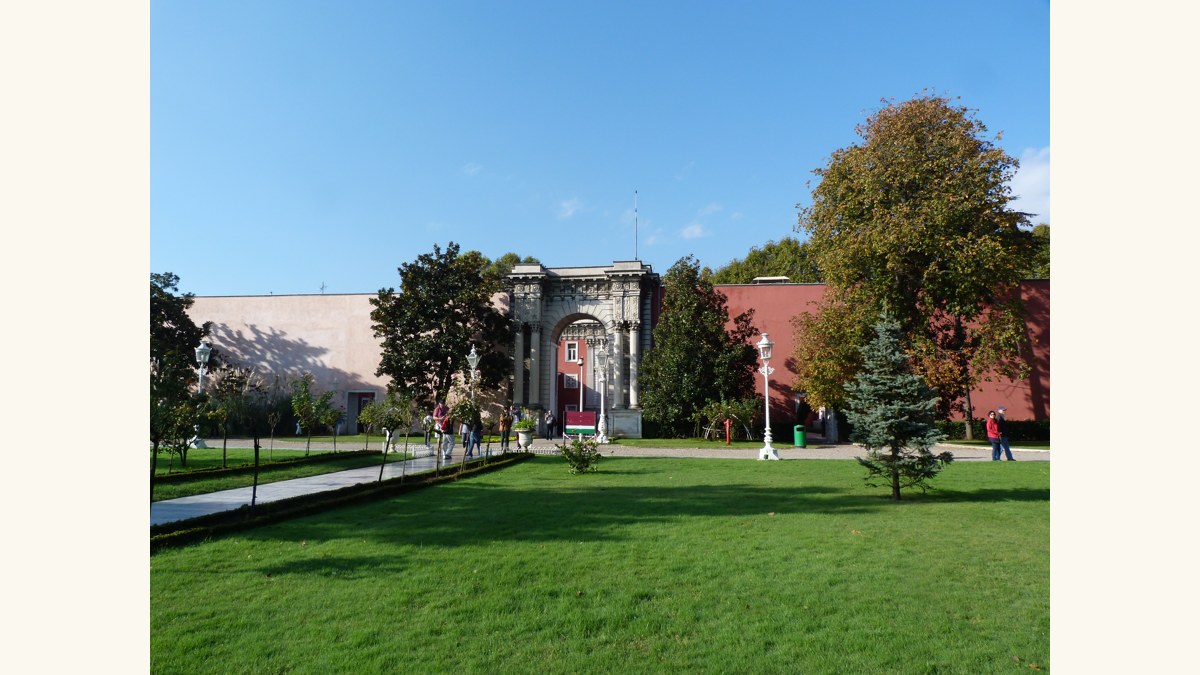
Dolmabahçe Palace gives us a documented architectural case. Turkey’s Ministry of Culture and Tourism identifies Karabet and Nikoğos Balyan as the palace’s leading architects. The National Palaces account names them alongside Ohannes Serveryan and James William Smith. These institutional descriptions establish Balyan involvement while making clear that a large building project involved several contributors. [3]
Architectural authorship, payment for construction and ownership of a palace must be kept separate. A palace built for a sultan is not automatically Armenian-owned property. It should therefore not enter an Armenian confiscation total solely because Armenian architects designed it. Contracts, unpaid receivables or separately owned family assets would be different research questions.
The same care applies to ordinary economic life. Houshamadyan’s study of Mersin identifies Armenian commercial houses, textile trade and the Manuelian and Keshishian cottonseed-oil factory. Such named businesses offer useful starting points for case files. Their existence does not by itself establish their market value, debts, shareholding structure or later disposition. [4] The atlas can orient this local research without becoming a substitute for company records.
02 / What the confiscation record can establish
From a household’s property to a public sale
Raymond H. Kévorkian’s open-access chapter, “The Property Law and the Spoliation of Ottoman Armenians,” examines the machinery through which individual and institutional assets were appropriated. Its discussion of the 1915 directives, liquidation commissions and implementing rules shows why legal language must be read alongside the violence that made people unable to protect their property. [5]
UCLA’s Armenian Genocide Research Program provides an especially useful documentary pathway. Its Emval-i Metruke project assembles newspaper notices of auctions in 34 locations, with English and Turkish texts and searchable transcriptions. The introduction explains that sales continued during the 1920s and 1930s. It also identifies incomplete newspaper collections as a limit on coverage. Sait Çetinoğlu collected the notices; the project credits its translators and other contributors by name. [6]
An auction notice is a trace of a process, not a complete account of its result. A future case file should distinguish an advertised price from the price actually paid, identify the former owner where the record permits it, and follow the proceeds where possible. Repeated advertisements for one property must not be counted as several confiscated properties.
The museum’s Artifact Collection introduces the importance of provenance. Survivor testimony can provide another route into property history, but testimony and a land register answer different questions. Neither should be forced to supply information it does not contain.
A necessary distinction
Property loss.
Compensation.
Human loss.
These belong in the same history, but they are not the same accounting category. A reparations proposal may include death, suffering, rebuilding and property together. Describing its entire sum as “stolen wealth” would change what the underlying calculation measures.
03 / From historical money to present-day USD
One number can conceal several different questions
The Armenian Genocide Reparations Study Group’s Resolution with Justice reproduces a 1919 reparations proposal totalling 19,130,972,000 francs. Its table covers both “Turkish Armenia” and the Republic of Armenia and Armenian-inhabited Caucasus provinces. The accompanying notes include compensation for deaths and provision for re-establishing families. It is therefore not a pure Ottoman property inventory. [7]
The report presents alternative forward valuations, including a CPI-based figure of approximately US$87.12 billion in 2014 dollars, before a proposed adjustment for later losses. This is an attributed calculation from a 2015 report, not an AGMC estimate of today’s confiscated wealth. The underlying historical table and exchange-rate assumptions must be checked before any updated calculation is presented. [7]
| Method | Question it answers | Evidence needed |
|---|---|---|
| US purchasing power | What US consumer spending would a historical dollar amount represent at a later date? | Dated original value, defensible historical currency conversion, named CPI series and endpoint. |
| Gold equivalent | What quantity of gold did a defined monetary amount represent, and what is that quantity worth at a specified later price? | Verified monetary standard, coin or paper distinction, fineness, weight and dated gold price. |
| Present property value | What would a specifically identified property be worth at the valuation date? | Ownership, boundaries, present condition, comparable transactions and treatment of subsequent improvements. |
| Lost income | What rent or business income was forgone under stated assumptions? | Revenue, expenses, survival of the enterprise, ownership shares, period and discount or accumulation method. |
The US Bureau of Labor Statistics describes CPI as a measure of consumer price change. Its inflation calculator uses the all-items CPI-U series. That makes CPI useful for a purchasing-power comparison, but it does not appraise an Istanbul building or establish how a business would have performed. [8]
For a reproducible CPI comparison, first establish a historical USD amount. Then multiply that amount by the endpoint CPI divided by the historical CPI. The published worksheet must identify both index observations. “Today” must become a named month or year; an incomplete current year must not be described as a completed annual average.
Currency conversion needs its own audit. A franc amount must not be treated as dollars before applying US inflation. Gold parity must not silently replace an actual exchange rate. A property’s present value and a compounded historical valuation of the same property are alternative perspectives; adding them together would double count it.
Investment scenarios require particular restraint. A chosen compound rate can produce an impressive sum over a century without establishing a historical outcome. Any scenario must display the rate, period, expenses and assumptions, and remain visibly separate from documented loss. The absence of a final aggregate does not weaken the evidence of dispossession. It identifies the work still required to measure its financial dimensions responsibly.
04 / Research register
What the next edition must resolve
- Banking case files: examine Carmont and the banking scholarship in full; identify named firms, offices, partners, dates, capital and assets. Verify any claim of European primacy against comparable institutions.
- Balyan case files: separate documented commissions, professional earnings, receivables and family-owned property. Verify each building attribution individually.
- Confiscation records: select individual UCLA notices, trace former ownership and avoid treating advertised sale prices as completed transactions.
- Historical assessments: obtain the underlying 1919 documentation cited by the reparations report, reconcile categories and currency assumptions, and separate Ottoman and Caucasus losses.
- Valuation workbook: publish traceable inputs and alternative methods only after their source values have been checked. Keep confirmed amounts, proposed scenarios and unquantified assets separate.
Family records may help identify an owner or property. Copies of deeds, business papers and photographs should retain their accompanying names, dates and provenance. The museum’s Museum in a Canadian Home explores the connection between family preservation and public history; Women & The Genocide is a reminder to investigate women’s property and labour rather than allowing prominent male financiers to define the whole account.
Source notes
Read the evidence.
- Pascal Carmont, The Amiras: Lords of Ottoman Armenia, Gomidas Institute, 2012. Bibliographic and publisher description consulted; full book remains to be examined.
- Joan George, Merchants to Magnates, Intrigue and Survival, 2009. Publisher description consulted; not a verified banking balance sheet.
- Ministry of Culture and Tourism: Dolmabahçe Palace; National Palaces account.
- Ani Voskanyan, Mersin: Commerce, Houshamadyan.
- Raymond H. Kévorkian, “The Property Law and the Spoliation of Ottoman Armenians”, Documenting the Armenian Genocide, 2023, pp. 159–186. This edition uses the chapter’s legal framework, not an independent appraisal of its cited assets.
- UCLA: The Auctioning of Stolen Armenian Properties. Project introduction and scope consulted; individual auction case files remain to be analysed.
- Armenian Genocide Reparations Study Group, Resolution with Justice, final report, March 2015, section 8.5.4, especially printed pp. 134–136. Historical table and valuation are reported as that study’s calculations, not adopted as an AGMC total.
- US Bureau of Labor Statistics, CPI Inflation Calculator and CPI questions and answers.
Sources accessed 6 November 2026. Citations acknowledge independent work and do not imply collaboration, affiliation or endorsement.