
WATCH INTRO ↗
Armenian Genocide Museum of Canada   /   Exhibit A

“Who, after all, speaks today of the annihilation of the Armenians?”— Adolf Hitler, August 22, 1939

We do.
A

Exhibit A   /   The Digital Collection

The Genocide
Digital.

A moving-image journey through history, memory and survival, presented by the Armenian Genocide Museum of Canada.

This digital exhibition brings together historical film footage, documentary materials and visual accounts exploring the Armenian Genocide, its devastating consequences and the resilience of those who survived.

Through moving images and historical interpretation, visitors encounter the destruction of Armenian communities, the experiences of survivors and the enduring importance of preserving historical evidence.

Each film offers a window into the past, honouring the memory of 1.5 million Armenian victims and ensuring their stories remain part of our collective historical consciousness.

The Moving Image Archive   /   1915–1919

History,
held in motion.

An evolving collection of moving-image records, historical interpretation and the voices of remembrance.

AGMC / MOVING IMAGE / 01
ARCHIVE FILM / 01

Rare Footage: Armenian Priest Meets American Military Delegation, Constantinople, 1919

This extraordinary and seldom-seen footage captures an Armenian priest meeting with an American military mission in Constantinople (modern-day Istanbul) in 1919, during the near aftermath of the Armenian Genocide. As the global community began to scrutinize the Ottoman Empire’s atrocities, Turkish officials often orchestrated carefully managed encounters like this — pressuring Armenian leaders to maintain appearances of normalcy.

Such meetings were frequently staged to mislead foreign observers, masking the horrific reality faced by the surviving Armenian population. This clip stands as a haunting reminder of the propaganda tactics used to deny ongoing suffering — and the resilience of those who bore witness.
AGMC / MOVING IMAGE / 02
ARCHIVE FILM / 02

Death March to Deir ez-Zor: Footage of Armenian Deportees (1915)

This haunting footage captures a convoy of Armenians being deported by Ottoman forces during the Armenian Genocide. Filmed in 1915, the video shows civilians—many of them women and children—marching toward the Syrian desert and concentration camps such as those in Deir ez-Zor. Scenes like these reflect the calculated death marches designed to erase the Armenian population from its ancestral homeland

AGMC / MOVING IMAGE / 03
ARCHIVE FILM / 03

The Baghdad Railway: Deportations to Death Camps

The Baghdad Railway, originally built to link Europe to the Middle East, became a critical route used to deport hundreds of thousands of Armenians into the Syrian desert. Many deportees were transported to death camps such as Deir ez-Zor, where they faced starvation, mass killings, and extermination.

The video also shows a young Armenian boy beside the body of his dead mother, one of countless victims abandoned along the deportation routes.

Historical accounts and survivor testimonies, including those cited in the documentary Aghet 1915 , describe how the railway lines became scenes of horror, with the bodies of Armenian women found mutilated, wooden clubs forcibly inserted into their anuses as acts of brutal violence .

Film archive materials are presented for education and remembrance. Film Archive & Rights.

The collection continues
THE ARCHIVE OPENS

Beyond the surviving frame.

History in motion. Memory without silence.

II / THE FILM COLLECTION

Before the silence.

The Armenian world was filled with language, music, education and ordinary moments of joy. Houshamadyan’s films return us to that world through photographs, memory and the traditions that endured.

Ourfa: A Scent of Memory

Houshamadyan · Archival photographic film

A Ride Through the Spiritual Landscape of Van

Houshamadyan · Historical photographic animation

Our Names

Houshamadyan · Armenian memory and language

Marash Schools

Houshamadyan · Girls’ education and memory

III / THE FILM COLLECTION

The voices that remain.

Oral histories carry the intimate details of family life, displacement, identity and the worlds survivors and their descendants worked to preserve. These filmed recollections deserve time and attention.

Zabel Sarafian-Moutafian — Oral History

Houshamadyan · Hadjin Armenian oral history

Makrouhi Tatoulian-Khachadourian — Oral History

Houshamadyan · Lebanon

Antranig Dakesian — Oral History

Houshamadyan · Beirut

IV / THE FAMILY ARCHIVE

One photograph. A world lost.

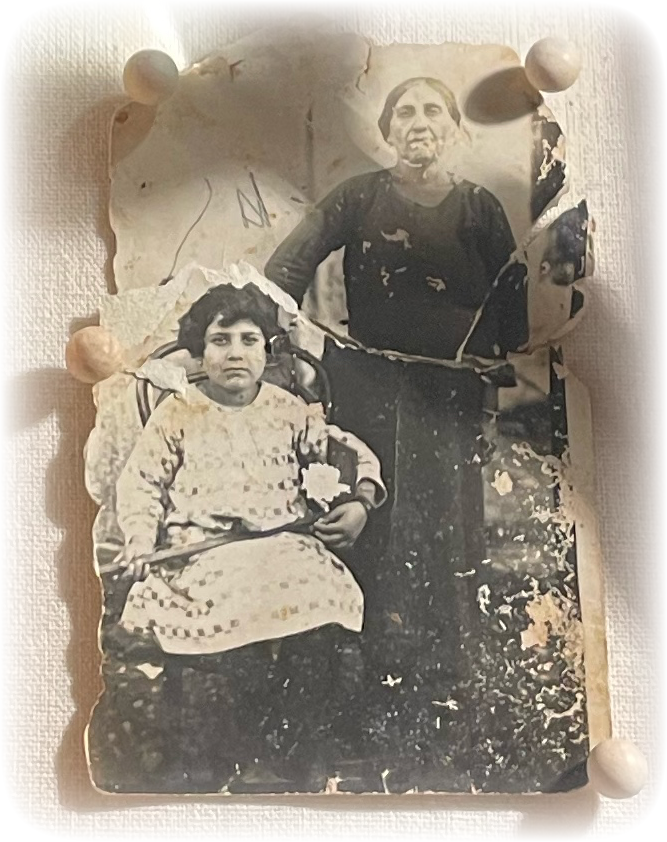
Among the museum’s treasured family artifacts is the surviving photograph of Mariam Khachigian Azilazian and her daughter Vartanoush. Their story reminds us that every image in the historical record belongs to a human life, a family and a community.

DISCOVER THE MUSEUM’S FAMILY STORY
Preserved historical family photograph of Mariam and Vartanoush Azilazian in the Armenian Genocide Museum of Canada collection

FROM THE ARMENIAN GENOCIDE MUSEUM OF CANADA COLLECTION

V / THE FILM COLLECTION

Life carried forward.

A home movie can hold what exile could not erase: a dance, a wedding, a gathering of friends. Houshamadyan’s surviving films show Armenian communities keeping the cultural memory of their ancestral towns alive.

Antranig / Andy Shahinian Family Film Archive

Houshamadyan · Bronx, New York · 1940s

From Palu to Providence — A Palutsi Picnic

Houshamadyan · Providence · 1930s

From Palu to Providence — A Palutsi Wedding

Houshamadyan · Providence · 1960s

From Palu to Providence — A Family Gathering

Houshamadyan · Providence · 1950s

VI / THE ARCHIVE CONTINUES

The world
was watching.

But too many turned away.

Beyond the surviving images of deportation and destruction are the faces of those who witnessed the aftermath—and those who carried children to safety.

VII / THE HISTORICAL RECORD

Witnesses in motion.

In 1919, an American military mission travelled through the devastated region, recording cities, relief stations and meetings. These surviving reels document the world the survivors confronted after the Armenian Genocide.

The Harbord Mission — Reel One

1919 · U.S. Army Signal Corps · Illustrative preview · Film context

The Harbord Mission — Reel Two

1919 · Armenia and Anatolia · Illustrative preview · Film context

VIII / THE MEMORY OF HOME

What survived the silence.

After displacement, Armenian families carried their homeland through language, ritual, photographs and song. Houshamadyan’s moving-image archive preserves these intimate continuities—memories that refuse to disappear.

These selections lead to Houshamadyan’s official video library, rather than to restricted or inaccessible third-party players.

IX / DISPLACEMENT AND REFUGE

The burning shore.

The fire of Smyrna in September 1922 forced Armenian and Greek families toward the waterfront and onto evacuation ships. Surviving newsreel images preserve moments of flight and uncertainty.

X / THE EXPANDING COLLECTION

The films
that survived.

The Armenian homeland lives on in voices, customs, celebrations and the everyday rituals carried into exile. A new chapter of moving images preserves the cultural world that endured. These films are presented in Armenian, allowing visitors to hear the language, voices and traditions of the communities whose memories they preserve.

Our Ancestors’ Games

Traditional games preserved across Armenian communities

Tahinov Hats

The history of Armenian tahini bread

The Voices of Hadjin

Dialect, songs and customs carried across generations

Armenian Presence in Dersim

Armenian villages, churches and cultural life

Shake Kasparian Baghdasarian

Oral history and food traditions recorded in Beirut

A Diyarbekir Armenian Wedding

A 1984 re-enactment of wedding traditions

THE COLLECTION CONTINUES

Every reel is a witness.

Additional archival films and testimony will join this growing exhibition.