Aurora Mardiganian survived the Armenian Genocide and carried its memory into places far removed from the roads of deportation: a New York publishing house, a California film studio and, decades later, an oral history interview. In each setting, the central fact remained the same. An Armenian woman was telling the world what had been done to her family and her people.
Her story deserves more than the description “survivor who became a film star.” That phrase identifies an extraordinary public moment but leaves much of her significance unexplored. Mardiganian was a witness, a displaced young woman and a participant in the difficult work of turning personal suffering into a record others could encounter. Remembering her means following that record across its different forms without losing sight of the person.
Before Aurora: Arshaluys and the life that was attacked
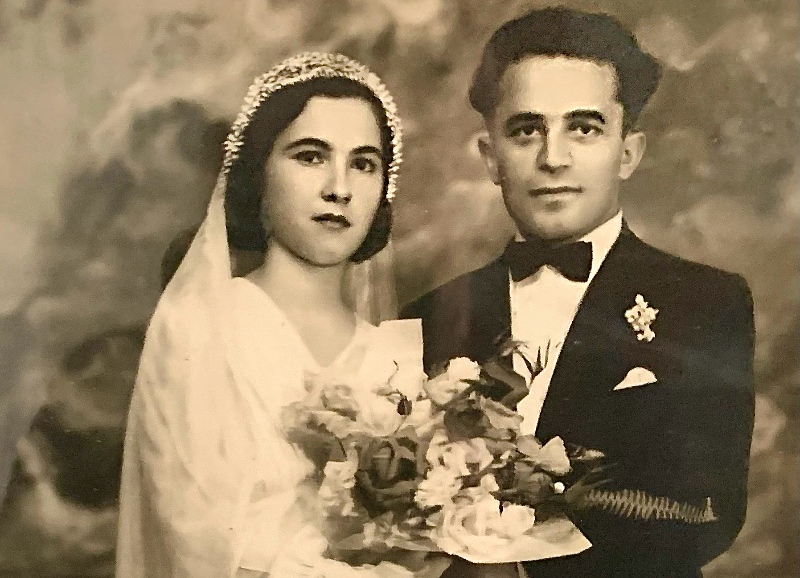
Born Arshaluys Martikian in 1901, Mardiganian came from Chmshkatsag in the Ottoman Empire. The Aurora Humanitarian Initiative’s biography describes her as one of eight children in a family whose father worked in farming and silk manufacture. Before the violence, she was a student and a young violinist. These details matter because they restore something that accounts of mass murder can obscure: there was a life before survival.
A family was more than a list of victims. It held ordinary expectations about education, work, marriage, music and the years ahead. The Armenian Genocide destroyed people within those relationships. To remember Mardiganian only from the moment of her suffering would leave the perpetrators’ violence defining the whole of her childhood.
The 1.5 million Armenians murdered in the Armenian Genocide were individuals with homes, occupations, friendships and futures. Mardiganian’s testimony brings one family into view within that immense destruction. Readers seeking the wider historical setting can begin with Inside the Armenian Genocide.
Deportation, captivity and escape
Mardiganian witnessed the murder of family members and endured forced displacement, captivity and sexual violence. The Armenian Genocide Museum-Institute’s remembrance of her life identifies both the violence inflicted on her and her determination to escape. Her survival did not undo the destruction she had witnessed; it made her a bearer of its memory.
There is no need to reproduce graphic detail to understand the gravity of these crimes. A responsible account can name sexual violence and enslavement clearly while refusing to make an Armenian woman’s suffering a spectacle. The purpose is to understand what she endured and what she later chose to communicate.
Her experiences belong within the history explored in the museum’s Women & The Genocide exhibit. That context helps prevent the public fame of one survivor from separating her story from the many Armenian women whose names and accounts remain less familiar.
A search for family became a public testimony
After reaching the United States, Mardiganian sought a brother who had emigrated before the Armenian Genocide. According to the Aurora Humanitarian Initiative, newspaper advertisements connected with that search drew journalistic attention to her story. The search itself deserves attention: reaching safety did not mean knowing which relatives were alive or where they might be.
In 1918, her account appeared as Ravished Armenia. The Library of Congress catalogue records Aurora Mardiganian and H. L. Gates as contributors to the volume, published in New York by Kingfield Press. The book brought a survivor’s experience before English-language readers soon after the events it described.
The publication is a historical source with its own form and circumstances. Readers encounter Mardiganian’s account through a printed English text produced with another contributor. Noticing that context helps us identify how testimony travelled to an unfamiliar audience. It does not diminish the Armenian Genocide or the suffering she described.
For those interested in women’s written witness more broadly, the museum’s Women Writers and Eyewitnesses exhibit offers a related route through the collection.
1919: a survivor appeared as herself on screen
The screen adaptation, Auction of Souls, also circulated under the title Ravished Armenia. The American Film Institute dates its release to 1919 and identifies Oscar Apfel as director, with Selig Studios producing for the American Committee for Armenian and Syrian Relief. Filming took place in late 1918. Mardiganian appeared as herself.
That casting created an exceptional and painful relationship between witness and performance. A survivor was participating in a reconstruction of experiences that had devastated her own life. Public attention to the film should never make that burden disappear behind the novelty of her appearance in Hollywood.
AFI’s production history also records the film’s connection to relief fundraising, including early screenings sold at high ticket prices. The screen was being used to make Armenian suffering visible and to mobilize assistance. These screenings belong to the history of public response to survivors, as well as to film history.
The surviving film material must be labelled accurately. It is a staged production based on a survivor’s experiences, not camera footage of the Armenian Genocide as it happened. A scene may express testimony while still being a reconstruction. Keeping those descriptions clear protects both the witness and the historical record.
The difference between being seen and being heard
A photograph of a survivor, a published book and a film performance can each attract attention. Attention alone, however, does not ensure that an audience understands the person’s experience. Mardiganian’s story asks us to look beyond the striking image and ask what the witness is communicating.
This is particularly important when a film still is separated from its caption and shared online. Without its production history, an image from a dramatization can be mistaken for an archival photograph of an actual event. Correct attribution gives viewers the information they need to understand what they are seeing. It also keeps a survivor’s testimony connected to the source through which it reached them.
Museums and readers share a practical responsibility here: keep names, dates, creators and captions attached to the material. The problem is not solved by the emotional power of an image. Its origin still matters.
Her voice survived beyond the silent film
Mardiganian’s testimony was not confined to the 1918 book or its screen adaptation. The Zoryan Institute recorded an audiovisual oral history interview with her in 1984. Its account of the project identifies that interview as a foundation for Aurora’s Sunrise, the animated documentary directed by Inna Sahakyan.
In its July 2022 announcement, the institute explained the relationship between the later film and its oral history collection. For readers following Mardiganian’s legacy, this creates an important sequence: an early printed account, a silent film in which she appeared, and a later recording of her speaking about her life.
These sources offer different encounters with the same survivor. A recorded interview preserves her voice and presence in ways a printed page cannot. A book can be returned to slowly, passage by passage. An adaptation introduces another layer of interpretation. Each should be identified rather than folded into an undifferentiated “story of Aurora.”
The importance of survivors as creators of historical records is also explored in our coverage of Documenting the Crime.
Reading Mardiganian with care
One useful way to approach her legacy is to keep three questions beside the material: Who created this particular source? When was it created? How does it relate to Mardiganian’s own account? These questions make the evidence easier to follow and the survivor harder to lose within later retellings.
They also encourage patience. A short extract cannot stand for a whole life. A dramatic scene cannot convey every relationship destroyed by the Armenian Genocide. Readers should have a route back to the longer work and enough information to distinguish a witness’s words from an editor’s explanation or a filmmaker’s reconstruction.
For educators, the museum’s Teacher Resources provide a starting point for placing individual testimony within a wider learning journey. Our Maps of the Armenian Genocide offer another way to connect names and narratives with the places from which Armenian communities were uprooted.
A legacy held in names, voices and records
Mardiganian died in California in 1994. The records she left continue to make demands on those who inherit them. They ask for preservation, accurate attribution and a willingness to listen beyond the familiar outline of an extraordinary survival.
Her life also belongs within the history of the Armenian Diaspora: people living far from their ancestral communities while carrying family memory into new languages and public spaces. The distance between Chmshkatsag and an American audience was geographic, but it was also a distance of experience that testimony sought to cross.
Remembering Aurora Mardiganian means keeping Arshaluys in view: the young person whose family and future were attacked, the woman who survived, and the witness whose account continues to reach readers. Her testimony should remain accessible as testimony, with the dignity of its author intact.
Sources and further reading
- Library of Congress: bibliographic record and digitized 1918 edition of Ravished Armenia.
- American Film Institute: Auction of Souls, release information and production history.
- Aurora Humanitarian Initiative: Aurora Mardiganian biography.
- Armenian Genocide Museum-Institute: remembrance of Mardiganian, February 2014.
- Zoryan Institute: the 1984 oral history and Aurora’s Sunrise, July 2022.