
A community museum wing
A dedicated gallery within an existing Armenian community or cultural centre, sharing infrastructure and welcoming new audiences.
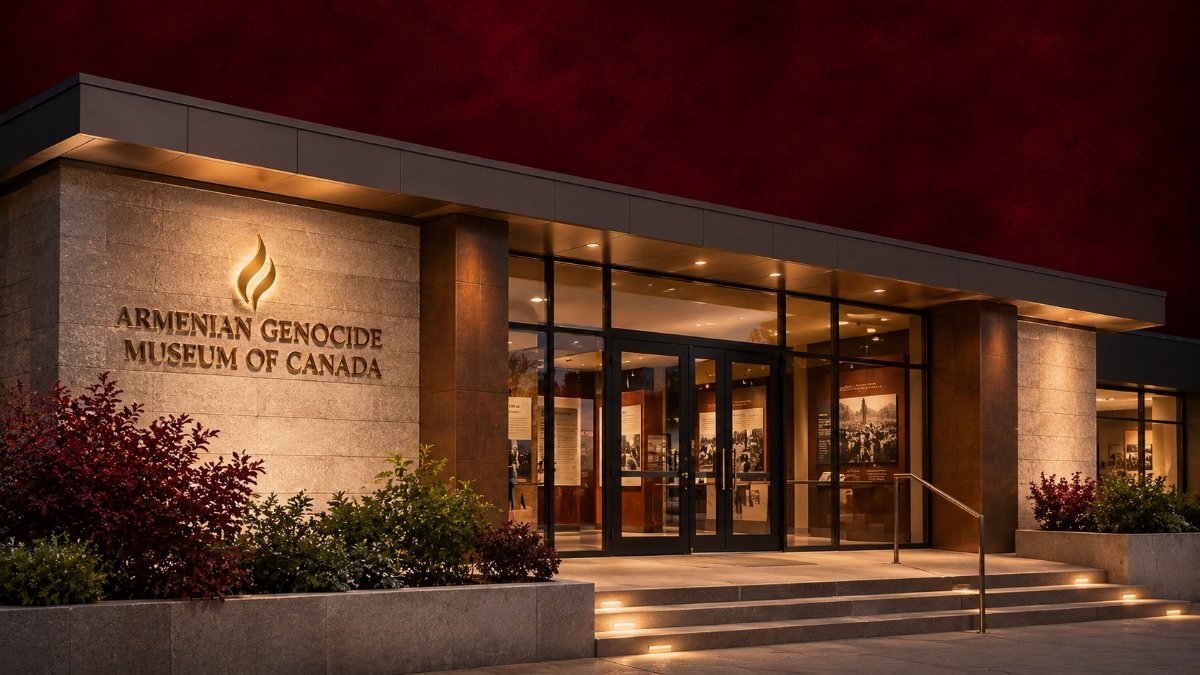
Armenian Genocide Museum of Canada / Our vision
From a Canadian home to a permanent place of remembrance, education and research. Help shape the next chapter of the Armenian Genocide Museum of Canada.
Be Part of the VisionAn architectural vision for the museum’s future home.
A vision without limits
The architectural vision is intentionally flexible, designed to adapt to a variety of spaces and partnership opportunities. Whether established within an existing cultural centre, an adapted property or a dedicated facility, the museum’s development will be guided by architectural feasibility, accessibility and long-term sustainability.
01 / Where we began
Within a Canadian home, a commitment to preserving the history of the Armenian Genocide became the foundation of a museum. Today, that commitment extends into digital exhibitions, historical research, survivor accounts, educational resources and Armenian cultural preservation.
Our next ambition is to bring these experiences together in a dedicated physical space where visitors can encounter history, ask questions and participate in remembrance.
02 / An achievable ambition
Canada’s Armenian communities have safeguarded memory across generations. A dedicated museum can bring that legacy into a public institution serving students, families, researchers and visitors of every background.
Our ambition begins with the right space, the right partnerships and a shared commitment to responsible stewardship. A compact, adaptable museum can have a national reach.

03 / Step inside the vision
Envision a museum where the history of the Armenian Genocide is encountered through evidence, personal belongings, testimony, scholarship and reflection. The following proposed spaces can be adapted to the scale of the eventual venue.
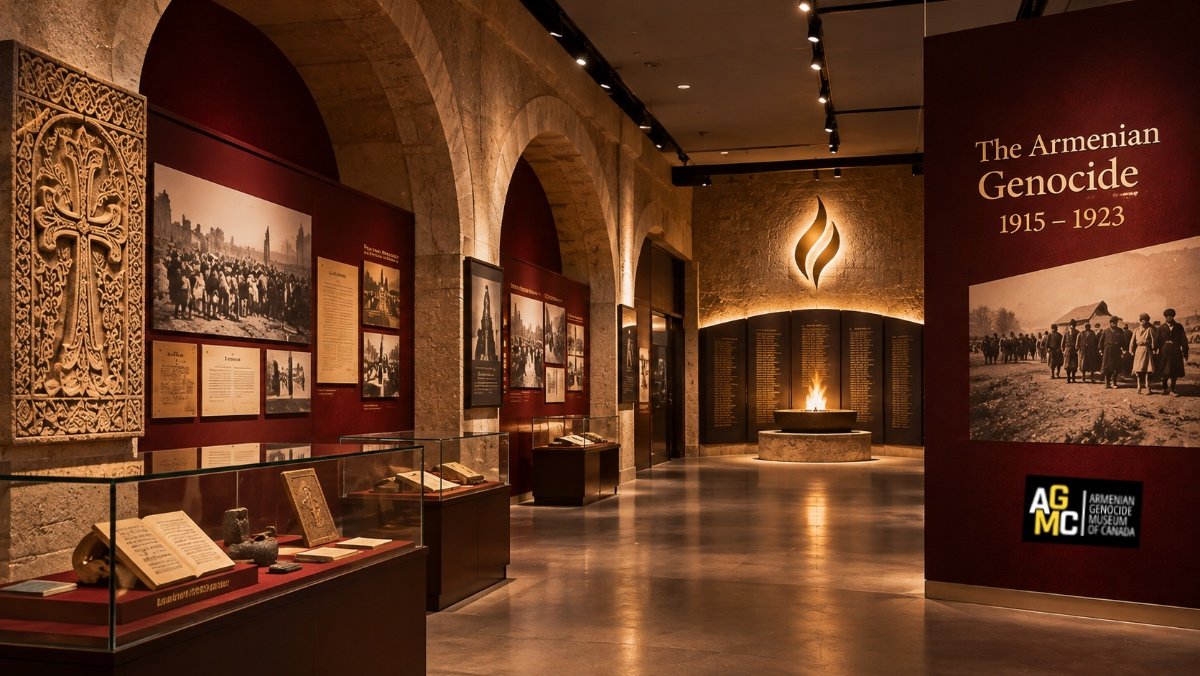
Proposed gallery / 01
The Armenian Genocide of 1915–1923 must be understood through the lives of the people affected, the historical evidence of their persecution and the enduring consequences of destruction. A permanent gallery would bring documents, photographs, maps and survivor accounts into a connected historical narrative.
Accessible interpretation, changing displays and digital resources would support visitors with different levels of historical knowledge.
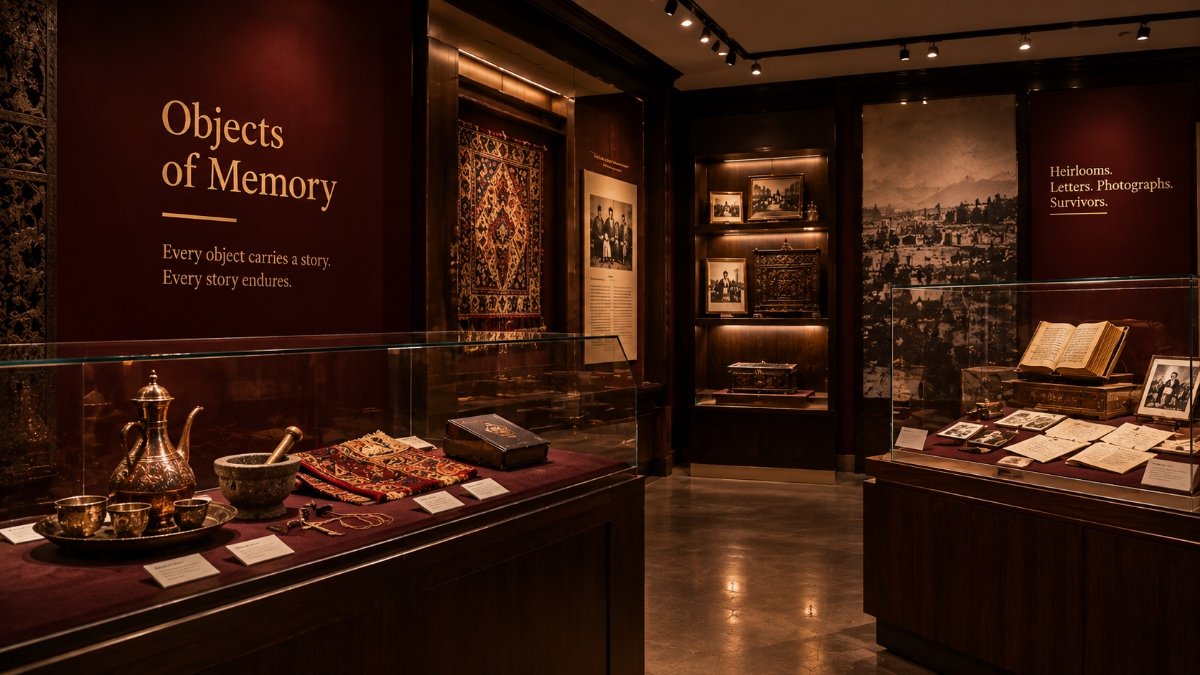
Proposed gallery / 02
An embroidered textile, a family photograph, a handwritten letter or a household object can preserve the story of a family across generations. This gallery would honour Armenian life before the Genocide and the objects carried into new homes by survivors and their descendants.
Families across Canada would be invited to discuss documentation, digitization, loans or donations, subject to collection policies and provenance review.
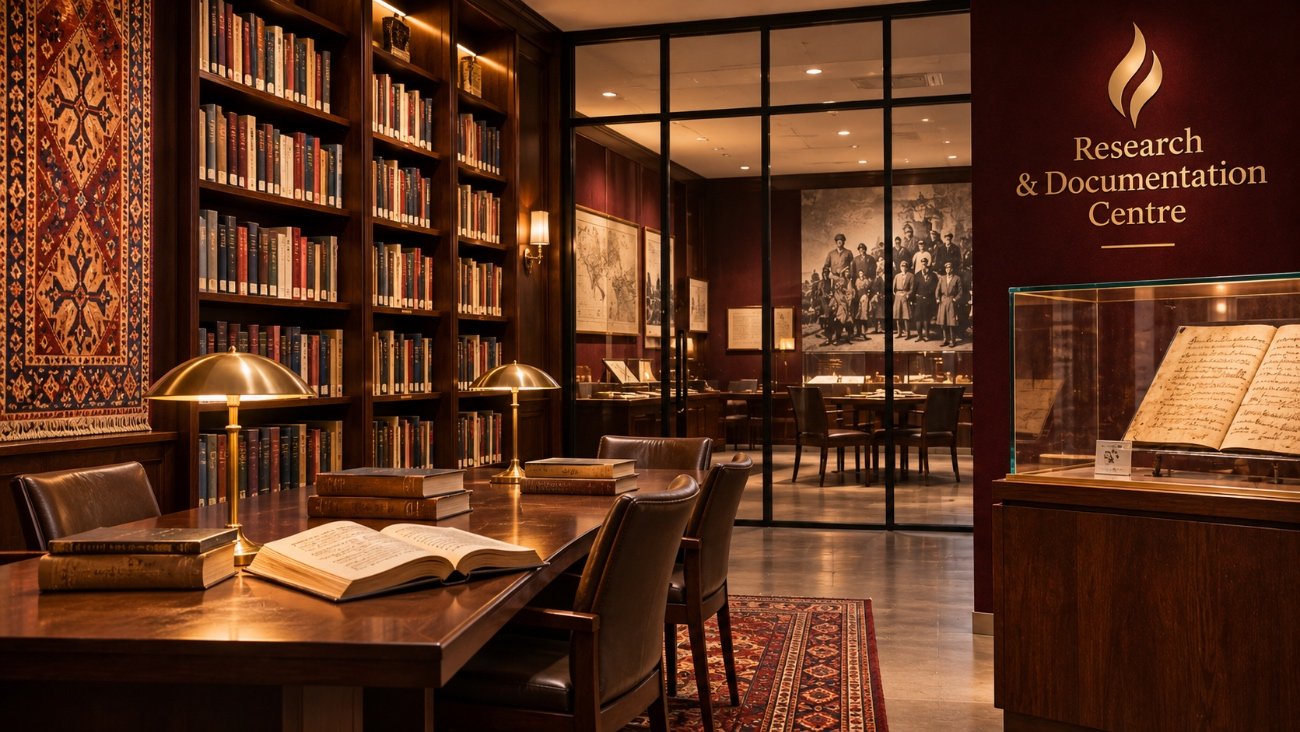
Proposed gallery / 03
A compact research library would connect the museum’s digital research with books, documents, oral histories and educational materials. It would provide a place for historical inquiry, family research and collaboration with scholars and educators.
The same space could host small workshops, Western Armenian language activities, school visits and community conversations.
Remembrance / Education / Preservation
A quiet place of remembrance would honour the more than 1.5 million victims of the Armenian Genocide. Its flame would represent memory carried through generations.
Flexible educational spaces, survivor testimony listening stations and digital heritage displays would extend the museum’s reach beyond its walls.
A contemplative space for reflection, commemorations and remembrance, adaptable to the eventual venue.
School visits, teacher resources, lectures and intergenerational learning in a welcoming multipurpose room.
Interactive maps, restored archival material, oral histories and digital exhibits accessible in person and remotely.
Responsible cataloguing, documentation and preservation of materials, supported by appropriate storage and professional guidance.
04 / Architectural vision
The museum can be organized around a compact visitor journey: welcome, historical discovery, personal stories, research and remembrance. Explore the proposed functions below.
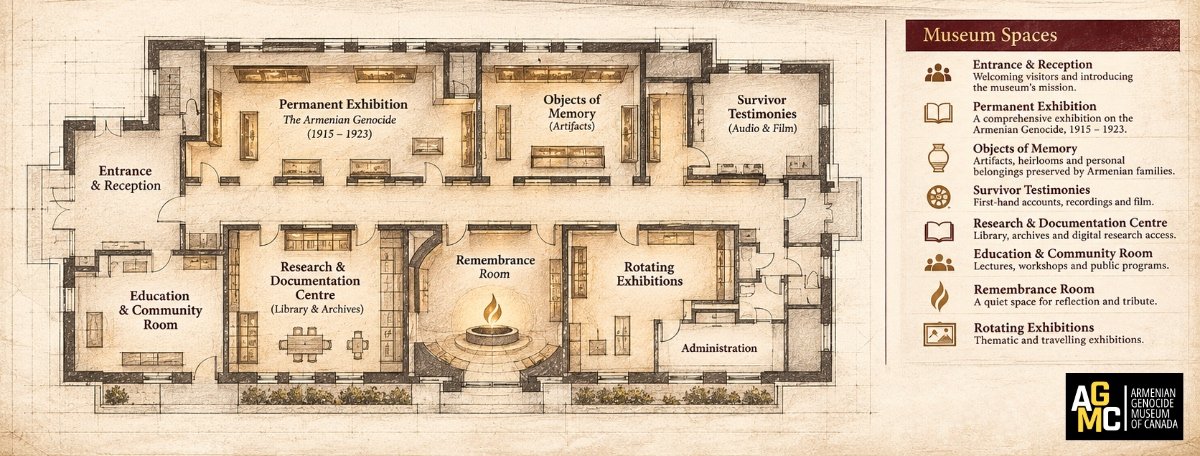
Illustrative architectural concept for a future museum.
A welcoming orientation space introducing the museum’s mission and visitor journey.
05 / A roadmap towards permanence
Established digital exhibitions, research and educational resources form the basis of the museum’s future work.
Consult with community leaders, cultural centres, prospective patrons and institutional partners.
Assess potential spaces, operating budgets, accessibility, collection care, funding and professional design requirements.
Move towards a dedicated public venue when partnerships, resources and sustainable operations are in place.
06 / An invitation to build a legacy
We invite Armenian community leaders in Toronto and across Canada, cultural institutions, foundations, businesses and individuals to help shape a permanent home for Armenian Genocide remembrance. Participation may begin with a conversation, an available space, a professional contribution or a long-term commitment.
Community centres, churches, cultural organizations and educational institutions can explore shared facilities, programming, outreach and collaborative exhibitions.
Propose a PartnershipIndividuals and families interested in helping establish a lasting cultural institution are invited to discuss philanthropic support and the museum’s long-term vision.
Discuss Founding SupportRecurring support can strengthen education, research, preservation and institutional capacity. We welcome conversations about appropriate sponsorship arrangements consistent with the museum’s mission and editorial independence.
Explore SponsorshipArchitects, historians, archivists, museum professionals, educators and advisors can contribute expertise to feasibility, interpretation and responsible stewardship.
Offer Professional Expertise
The next chapter begins with a conversation
We welcome confidential initial discussions and expressions of interest from across Canada. Every meaningful partnership begins with a conversation.
The Armenian Genocide Museum of Canada is a nonprofit institution. This invitation concerns potential philanthropic and institutional support.