Armenian Genocide Museum of Canada · Exhibit A
History Survives.
On Film.
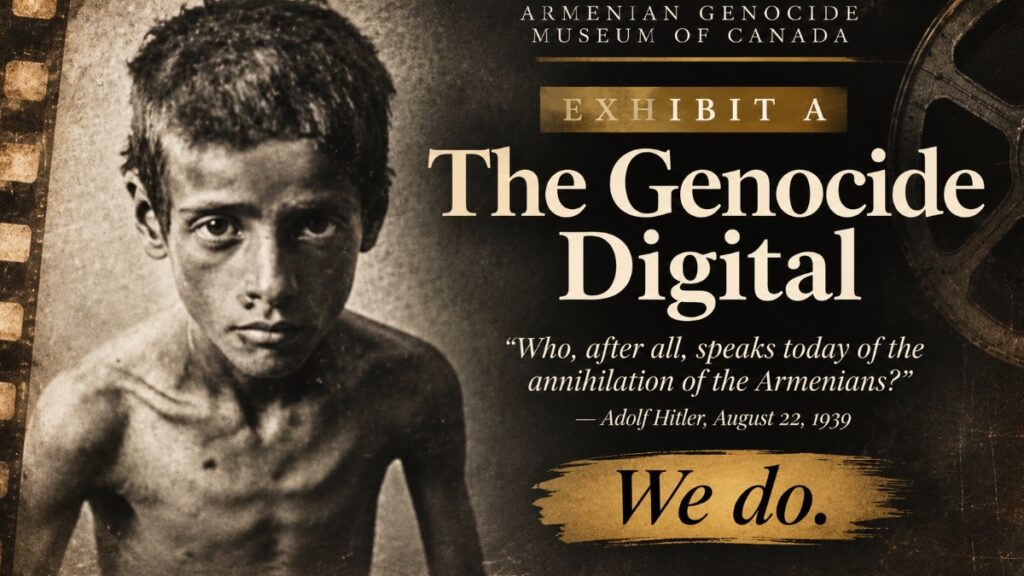
The Armenian Genocide Museum of Canada unveils a cinematic introduction to Exhibit A: The Genocide Digital, an expanding collection of historical footage, survivor testimony and Armenian cultural memory.
History survives not only in documents and photographs, but in movement.
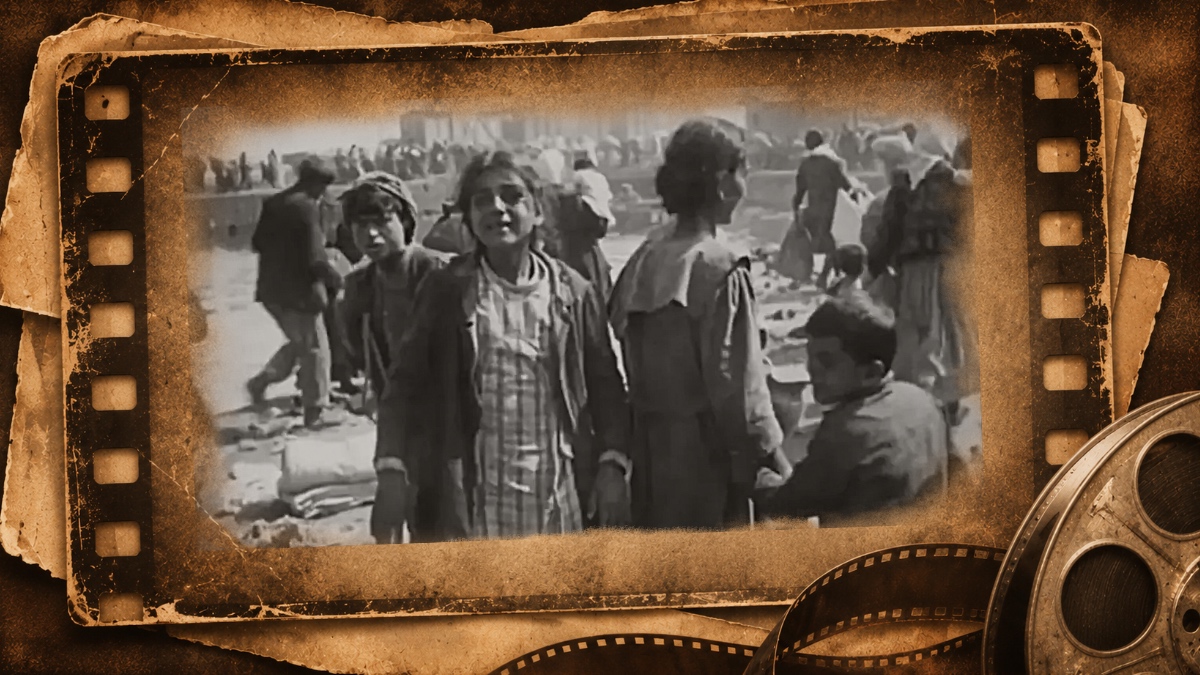
A face captured by a camera. A child standing among survivors. A community whose world was forever changed.
These fragments of moving history bring us closer to the people whose lives were transformed by the Armenian Genocide.
The Armenian Genocide Museum of Canada invites visitors to experience Exhibit A: The Genocide Digital, a cinematic journey through historical evidence, survivor memory and the remarkable films that have endured.
A Journey Through Historical Evidence
At the heart of the exhibition is a newly developed cinematic introduction designed to immerse visitors in history before they begin exploring the film collection.
Through atmospheric archival imagery, dramatic typography, historical quotations and an orchestral soundscape, the introduction unfolds as a powerful sequence of remembrance.
It begins with historical references associated with Adolf Hitler’s remarks in 1939, before moving through the wartime reporting of American Ambassador Henry Morgenthau and the eyewitness accounts of American Consul Leslie A. Davis.
The sequence also explores Raphael Lemkin’s connection to the Armenian Genocide and his later development of the concept of genocide.
Each chapter contributes to a larger historical narrative: the atrocities were witnessed, documented and reported, yet the suffering of the Armenian people continued.
As the introduction reaches its conclusion, the exhibition’s title emerges through a dramatic cinematic transition, opening the way to the historical films and survivor narratives that follow.
When the Past Moves Before Our Eyes
Early motion pictures preserve something that photographs alone cannot always convey: movement, expression and fleeting moments of human experience.
Exhibit A brings together historical footage documenting the aftermath of the Armenian Genocide, the journeys of displaced survivors, humanitarian relief efforts and the rebuilding of Armenian lives.
Among the materials are films associated with the 1919 American military mission to Turkey and Armenia, as well as recordings documenting international relief operations.
Scenes of orphanages, displaced families and communities struggling to rebuild offer a deeply human perspective on the consequences of the Genocide.
These films are not simply illustrations of history. They are surviving historical records, each requiring careful examination and interpretation.
More Than the History of Destruction
The Armenian Genocide claimed the lives of 1.5 million Armenians, devastating communities and destroying generations of cultural inheritance.
Yet the surviving film record also reveals the extraordinary determination of Armenians to preserve their identities, traditions and collective memory.
Moving images of family gatherings, dances, community celebrations and oral histories offer glimpses of Armenian cultural life carried into the diaspora.
Historical materials associated with Houshamadyan help connect these memories to the towns and villages from which Armenian families came, including Hadjin, Palu and Van.
Through these recordings, we encounter not only the consequences of destruction but also the resilience of a people determined to preserve their language, music, customs and heritage.
The exhibition also recognizes the experiences of women whose testimonies, family histories and contributions to community survival remain essential to understanding the Armenian Genocide and its aftermath.
The moving-image archive
The Films That Survived.
Every surviving recording represents a fragment of a much larger history.
Some preserve extraordinary moments of human endurance. Others document the devastation witnessed by foreign observers, relief workers and survivors themselves.
Together, they form an invaluable visual record of suffering, survival and remembrance.
Exhibit A · The Genocide Digital
History survives.
So must memory.
Discover the historical films, survivor testimonies and Armenian cultural memories preserved within the exhibition.
Explore the Exhibition